Author: Viabox Team

  • EU’s €3-Per-Item Duty: What US Shoppers Must Know Before July 1

    EU’s €3-Per-Item Duty: What US Shoppers Must Know Before July 1

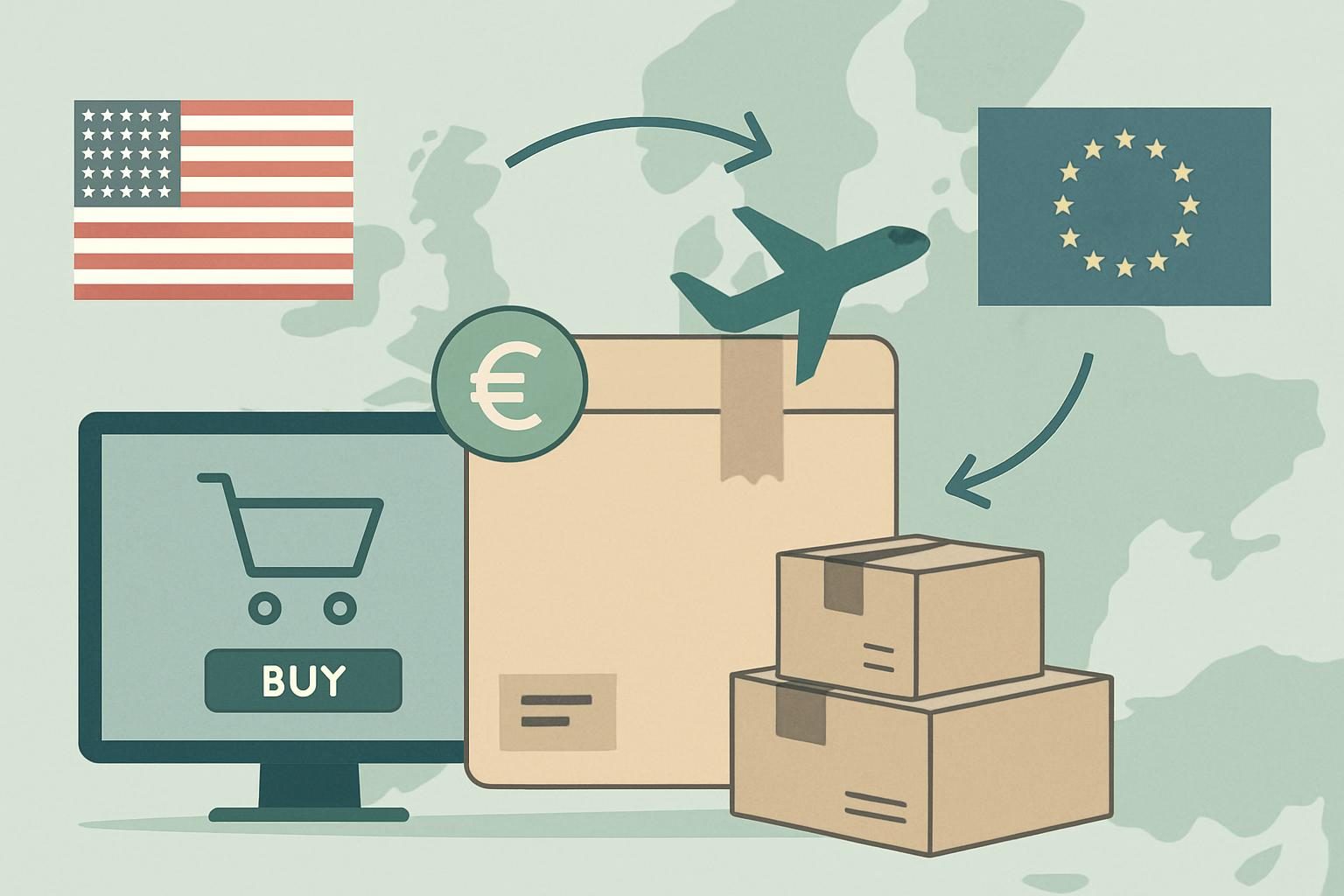
    With less than three weeks until July 1, European shoppers who buy from US stores are focused on one number: €150. That’s the threshold below which parcels entered the EU duty-free — until now. But the European Commission’s June 2 implementation guidance for the new customs levy revealed a detail that changes the math considerably: the €3 charge applies per tariff subheading, not simply per parcel.

    How the €3 Duty Actually Works

    From July 1, 2026, every low-value parcel entering the EU from outside the bloc — a category covering roughly 93% of cross-border e-commerce flows — will attract a €3 customs duty for each distinct type of goods it contains, classified by their 10-digit TARIC commodity code. A single parcel with a single item type: one €3 charge. A parcel combining different product categories: one charge per category.

    The European Commission used this illustrative breakdown in its June guidance: a parcel containing silk blouses and wool blouses incurs two separate €3 charges, not one, because those two garment types fall under different tariff subheadings. That example extends across all product categories — clothing, electronics, cosmetics, sporting goods.

    In plain terms:

    • Five identical items (same product, same tariff code) in one parcel → €3 total duty
    • Five items from five different product categories in one parcel → €15 total duty
    • Two parcels each containing different item types → duty charged on each separately

    This is a meaningful cost difference for shoppers who routinely bundle unrelated purchases — a pair of sneakers, a supplement, and a kitchen gadget, say — into one consolidated shipment.

    Why This Matters for Shopping From US Stores

    The rule targets all non-EU sellers registered under the Import One-Stop Shop (IOSS) scheme — the mechanism most major US retailers and marketplaces use to handle EU VAT at point of sale. If you’ve been shopping at US retailers and forwarding goods home to Europe, your shipments fall squarely within scope.

    The duty is temporary, running from July 1, 2026 to mid-2028 while the EU builds its permanent Customs Data Hub. A second charge — a €2 customs handling fee — is expected to be layered on top in November 2026, bringing the per-item-type cost to €5 per tariff line.

    Neither fee sounds large on its own, but they compound quickly on mixed-category orders. A five-item haul spanning four different product types would incur €20 in handling charges under the full November 2026 fee structure — before standard customs duties apply to any goods that already carry them (electronics, textiles, etc.).

    Practical Strategies to Minimize Your Duty Bill

    The per-subheading structure rewards shoppers who are deliberate about how they group purchases:

    • Batch by product type. Instead of shipping a mixed haul, consolidate all clothing in one shipment and electronics in another. Each shipment pays €3 once, regardless of how many units of the same product type it contains.
    • Act before July 1. Purchases already in transit or cleared before the deadline leave the EU under the old rules. If you’ve been holding off on a US order, the next two weeks are your window.
    • Bundle quantity, not variety. Buying three of the same item from the same store costs the same €3 duty as buying one. Resellers in particular can leverage this — buy deeper in one SKU per shipment rather than sampling across categories.
    • Factor duty into your cost comparison. US prices remain compelling even with the new fee, but run the full landed-cost math: item price + US sales tax (often avoidable via Oregon-based addresses) + shipping + €3 per product type + any applicable customs duty rate.

    What to Do Right Now

    If you have packages waiting at a US warehouse, now is the time to review what’s in each shipment and whether consolidating by product category makes sense before dispatching. If you use Viabox — which gives you a real Portland, Oregon address with no monthly fee — their consolidation service lets you hold multiple incoming packages and combine them into a single outbound shipment. Going into July, grouping similar items together before you ship is one of the simplest ways to keep your EU customs bill predictable.

    For shoppers who’ve been on the fence about a US purchase: the window before the July 1 cutoff is short but real. Orders that arrive at your US forwarding address and ship out before July 1 clear EU customs under the current zero-duty rules for sub-€150 parcels.

    The Bigger Picture

    The EU’s customs overhaul reflects a global pattern: governments that built their e-commerce import rules around the old direct-from-factory, low-value parcel model are systematically closing the gap. The US ended de minimis treatment for China-origin parcels in August 2025. The EU is following with this July 2026 measure. The UK has flagged reforms to its own £135 threshold before 2029.

    None of this eliminates the value of shopping US stores for international buyers. US retail depth, brand availability, and pricing — particularly in categories like outdoor gear, supplements, beauty, electronics accessories, and fashion — remain hard to match locally for shoppers across Europe, the Gulf, Latin America, and Asia. The calculus is shifting, not reversing. Knowing exactly how the new charges apply puts you ahead of the majority of shoppers still running on old assumptions.

    Ready to put your US address to work? Log in to your Viabox dashboard to manage shipments and consolidate packages — or create your free US address in minutes.

    Go to my Viabox dashboard →

  • Amazon Prime Day 2026: The International Shopper’s Guide

    Amazon Prime Day 2026: The International Shopper’s Guide

    Amazon confirmed this week that Prime Day 2026 kicks off on June 23 and runs through June 26—four full days of deals for Prime members. Early discounts are already live from brands including Apple, Bissell, Ninja, Sony, Casper, and Carhartt, with the headline sales set to drop at 12:01 a.m. PDT on June 23. For anyone who shops US stores and ships internationally, this is one of the most important dates on the retail calendar.

    What Is Prime Day 2026 and What Is on Sale

    Prime Day is Amazon’s annual sales event exclusively for Prime members. The 2026 edition expands to four days for the first time, covering more than 35 product categories. Early confirmed discounts range up to 52% off tech products, and deals span clothing, beauty, kitchen and home goods, electronics, tools, and more. Prime membership costs $139 per year in the US, though new members can start a free 30-day trial to qualify for all Prime Day access.

    Which Countries Have Direct Prime Day Access

    Amazon is running the June Prime Day event across 22 countries: Austria, Belgium, Canada, Colombia, Egypt, France, Germany, Ireland, Italy, Luxembourg, Mexico, Netherlands, Poland, Portugal, Saudi Arabia, Singapore, Spain, Sweden, Türkiye, the United Arab Emirates, the United Kingdom, and the United States. Shoppers in Australia, Brazil, India, and Japan will receive their own regional Prime Day events later in the summer.

    That leaves a large share of the world without direct June access: most of Southeast Asia beyond Singapore, most of Latin America outside Mexico and Colombia, most of Africa outside Egypt, and much of the Middle East beyond Saudi Arabia and the UAE. For shoppers in those markets, the path to Prime Day runs through a US address.

    Why the US Amazon Store Still Has the Best Deals

    Even for shoppers in countries that do have local Prime Day access, the US version of Amazon is typically worth targeting. A few reasons stand out:

    • US-exclusive products: Thousands of items on Amazon.com are not listed on local Amazon storefronts. This includes specific electronics configurations, niche brands, and products from US-only third-party sellers.
    • Deeper discounts: The US event has historically offered steeper markdowns than regional versions, reflecting Amazon’s largest and most competitive seller marketplace.
    • Wider category depth: Home appliances, outdoor gear, supplements, and specialty electronics tend to have significantly more options on Amazon.com than on regional equivalents.

    This is why shoppers in the Gulf, Latin America, Europe, and Southeast Asia frequently target Amazon.com directly, even when a local Prime Day storefront is available.

    How to Shop US Prime Day Deals From Any Country

    The main obstacle for international shoppers is logistics. Many Amazon.com sellers only ship within the United States, or charge international rates that erase any discount. The practical solution is a US forwarding address.

    With a real US street address, you can shop any seller on Amazon.com—including domestic-only sellers—and have orders delivered to that address. A forwarding service then receives your packages, consolidates multiple orders into one parcel if you choose, and ships everything to your home country. Consolidation matters here: combining three or four Prime Day purchases into a single international shipment can cut your per-item freight cost dramatically compared to sending each order separately.

    Viabox gives international shoppers a real Portland, Oregon address with no monthly fees—you pay only when you forward a shipment. It is a straightforward way to unlock the full US Prime Day catalog regardless of where you live.

    Tips to Make the Most of Prime Day

    • Set up your US forwarding address before June 23. Have your shipping address ready so you can check out immediately when deals go live—do not let logistics be the bottleneck.
    • Build a wishlist now. Amazon shows the discount percentage relative to recent pricing, so tracking items before the event helps you judge whether a deal is genuinely good.
    • Order from multiple sellers and consolidate. Hold your packages until all Prime Day orders are in, then ship them together as one international parcel to maximize savings.
    • Check your country’s duty-free import threshold. Many countries allow low-value imports below a set limit duty-free. Timing or splitting shipments can help you stay within that threshold.
    • Consider a Prime trial if you are not a member. New US Prime accounts qualify for a free 30-day trial—more than enough to cover the full four-day event on June 23–26.

    The Bottom Line

    Amazon Prime Day 2026 is the biggest edition yet: four days, more than 35 categories, and early access deals already live. Whether you are in one of the 22 countries with direct June access or not, the US store consistently offers the widest product selection and the sharpest discounts. With a US forwarding address set up in advance and a plan to consolidate, international shoppers can participate fully and ship home whatever they buy.

    Sign up with Viabox for free before June 23 and have your US address ready when the deals go live.

    Ready to put your US address to work? Log in to your Viabox dashboard to manage shipments and consolidate packages — or create your free US address in minutes.
    Go to my Viabox dashboard →

  • DHL-USPS $10B Deal: What It Means for Your US Address

    DHL-USPS $10B Deal: What It Means for Your US Address

    On May 28, 2026, DHL eCommerce and the United States Postal Service announced a long-term exclusive partnership valued at over $10 billion — the largest expansion in the two companies’ 25-year relationship. At almost the same moment, FedEx publicly declared it is stepping back from chasing mainstream consumer parcel volume. Together, these two developments are quietly reshaping the carrier landscape behind every US address, including the ones international shoppers use to receive packages before forwarding them home.

    What the DHL-USPS Deal Actually Does

    The structure of the deal is straightforward. DHL eCommerce handles the upstream work: collecting packages from retailers and merchants, sorting them through its 19 fully automated US hubs, and moving them via its own air and ground linehaul network. The United States Postal Service then takes over for the final mile — the last leg to a doorstep or, for international shoppers, to a US package-forwarding warehouse.

    The USPS final-mile network is difficult to replicate. It covers more than 41,550 ZIP codes, reaches over 170 million delivery points, and operates six days a week. The new exclusive agreement also allows DHL eCommerce to handle heavier packages and offer mid-tier speed and price options that previously weren’t available under the old arrangement. In short: more packages, more routes, and a locked-in partnership that both parties say will define the next several years of US e-commerce delivery.

    FedEx Is Pulling Back — at the Same Time

    At its February 2026 Investor Day, FedEx announced a strategic retreat from general consumer e-commerce. The company is refocusing on premium, specialized segments — healthcare shipments, automotive parts, aerospace components, data center equipment — where service complexity justifies better pricing. FedEx projects only low single-digit growth in its B2C parcel volume through 2029 and has signaled clearly that everyday retail packages are no longer its core priority.

    The practical result: a larger and growing share of standard retail orders — clothing, electronics, cosmetics, home goods — will travel through USPS, DHL eCommerce, and UPS rather than FedEx. For anyone receiving US packages at a forwarding address, this is not an abstract trend. It is a change in which carrier will be knocking on the warehouse door.

    Why Your US Forwarding Address Matters More Now

    When you order from a US retailer, you usually cannot choose which carrier delivers the package — the merchant decides. As more US merchants integrate DHL eCommerce into their fulfillment stack and FedEx becomes less common for routine orders, the delivery mix at a US receiving address will shift toward USPS-handled shipments.

    This creates a few practical questions worth checking before your next purchase:

    • Does your US address accept USPS deliveries without restrictions? Not every private mailbox provider handles USPS the same way they handle UPS or FedEx. Some charge extra fees for USPS parcels; others impose size limits or simply don’t accept them. A real US street address that accepts all carriers under the same terms is increasingly the safer choice.
    • Will you be notified by carrier? Knowing whether an incoming package arrives via USPS, FedEx, or UPS helps you track it accurately and time your consolidation before international shipment.
    • Is your forwarding provider keeping pace with the DHL eCommerce handoff? DHL eCommerce drops packages with USPS before the final mile — so the package may scan as USPS even if the retailer’s confirmation email says DHL. Understanding the handoff avoids confusion when tracking.

    The Consolidation Window Is Getting Shorter

    One direct benefit of the DHL-USPS deal is faster, more reliable domestic delivery for standard retail orders. DHL eCommerce is investing in additional hub capacity and heavier-package capability, which means packages from US retailers may reach a forwarding warehouse faster than they did a year ago.

    That speed creates an opportunity. If you are buying from multiple US stores — a common pattern for resellers and international shoppers placing several orders in the same window — faster domestic delivery means your packages are more likely to arrive at your US address within days of each other rather than spread across weeks. That makes package consolidation more practical: rather than paying full international shipping rates on three or four small boxes, you wait for them to arrive, combine them into a single shipment, and pay once. For shoppers in the Gulf, Mexico, Southeast Asia, or Europe, consolidation routinely cuts per-order international shipping costs by 40 percent or more.

    Viabox’s warehouse in Portland, Oregon accepts deliveries from all major US carriers — USPS, UPS, FedEx, and DHL — and offers consolidation and repacking before your order goes international. As the domestic carrier mix shifts toward USPS and DHL eCommerce, that full-carrier coverage matters.

    The Bigger Picture

    The DHL-USPS deal and FedEx’s strategic retreat are both signals of consolidation in US domestic parcel logistics. Fewer, larger players with deeper infrastructure generally means more reliability — more automation, more consistent transit times, fewer handoff gaps. For international shoppers, the lesson is simply to verify that your US address can handle what that consolidated market delivers. The carrier your favorite US retailer chooses today may be the one they use for the next five years.

    Ready to put your US address to work? Log in to your Viabox dashboard to manage shipments and consolidate packages — or create your free US address in minutes.

    Go to my Viabox dashboard →

  • US Proposes New Tariffs on 60 Countries: What Shoppers Must Know

    US Proposes New Tariffs on 60 Countries: What Shoppers Must Know

    On June 3, 2026, the Office of the United States Trade Representative (USTR) announced proposed Section 301 tariffs of 10% to 12.5% on imports from 60 economies worldwide. The stated reason: those countries have either no legal ban on goods made with forced labor, or bans they are not effectively enforcing. A public comment period is open through July 6, with formal hearings beginning July 7.

    If you shop US stores and ship internationally, this proposal deserves your attention — even though the tariffs are on goods entering the United States, not leaving it. Here is what it means in plain terms.

    Which Countries Are on the List?

    The scope is broad. Fifty-four of the 60 economies have no legal prohibition on forced-labor goods at all; those face the higher 12.5% proposed rate. These include China, India, Brazil, Japan, Vietnam, Bangladesh, and dozens more. The remaining six — Canada, the European Union, Ecuador, Indonesia, Mexico, and Pakistan — maintain prohibitions on paper but were found to be failing enforcement. They face the lower 10% rate.

    A separate textile mechanism has been proposed that would allow certain volumes of apparel and garment imports from some economies to enter the US at a reduced tariff rate, acknowledging how deeply fashion supply chains are woven across borders.

    Why This Matters to International Shoppers

    Here is the connection that matters most if you buy from US stores and ship internationally: a large share of American retail inventory is manufactured in the very countries now facing these tariffs. Footwear assembled in Indonesia. Electronics components from China. Garments from Bangladesh and Vietnam. Housewares from India. All of these move through US retailers before they reach you.

    When the cost of importing those goods into the US rises, US retailers eventually adjust their prices upward. It is not instantaneous — companies work through existing inventory and renegotiate supplier contracts — but over a period of weeks to months, higher input costs tend to show up at the shelf.

    For small import and resale businesses that source US brand-name goods — sneakers, electronics, cosmetics, fashion — to sell in the Gulf, Latin America, Southeast Asia, or Europe, this is a direct squeeze on sourcing margins. The products you currently buy at a comfortable markup could cost meaningfully more at the US source by late 2026 if these tariffs are finalized.

    The Timeline: Proposed, Not Yet Final

    These are still proposals. Written comments are accepted until July 6, and public hearings before the Section 301 Committee begin July 7. There is typically a gap of weeks to months between a hearing and a final determination. However, the Trump administration has consistently moved from tariff proposal to implementation throughout 2026, and trade analysts broadly expect the majority of these duties to take effect in some form.

    Importantly, even proposed tariffs shift business behavior. US importers and retailers begin adjusting inventory, renegotiating supplier terms, and building in margin buffers well before a final rule — which means price movement at the retail level can start before the duties are officially in force.

    What Smart Shoppers and Resellers Are Doing Now

    • Front-loading on high-margin SKUs. Buyers who know their product categories are locking in orders now on branded goods — particularly footwear, electronics, and apparel — while US retail prices still reflect pre-tariff supply chain costs.
    • Consolidating before shipping. Rather than dispatching each purchase separately, experienced resellers are batching multiple orders into a single consolidated shipment to reduce per-unit shipping costs. When sourcing costs rise, cutting freight overhead becomes even more valuable.
    • Monitoring apparel specifically. The proposed textile mechanism adds a layer of uncertainty to fashion and garment sourcing. Shoppers buying US clothing brands should watch for updates from the July 7 hearings, as the final apparel rules could differ from the headline rates.
    • Documenting shipments carefully. As customs enforcement tightens globally, accurate and detailed customs declarations help packages clear without delays or additional duties at the destination country.

    Using a US Address to Buy Now

    If you do not already have a US shipping address, this is a practical moment to set one up. Services like Viabox give international shoppers a real US street address in Portland, Oregon — so you can shop any US retailer, have packages held and consolidated, then forward everything as a single shipment to your home country. There are no monthly fees; you pay only when you ship. For resellers stocking up ahead of possible price increases, package consolidation can cut shipping costs significantly versus sending each purchase individually.

    The tariff proposal is not finalized yet, and the July hearings may result in adjustments. But the direction of travel in US trade policy in 2026 has been consistent. If you have been planning a significant purchase from US stores, doing it before supply chain adjustments work their way to the retail level is reasonable, not alarmist.

    Monitor the USTR’s Section 301 proceedings for updates, and check your target product categories against the list of affected economies to understand where price pressure is most likely to arrive first.

    Ready to put your US address to work? Log in to your Viabox dashboard to manage shipments and consolidate packages — or create your free US address in minutes.
    Go to my Viabox dashboard →

  • USPS Changes DIM Weight Rules July 12: What Shoppers Must Know

    USPS Changes DIM Weight Rules July 12: What Shoppers Must Know

    What USPS Is Changing — and Why It Matters

    On July 12, 2026, USPS is lowering its dimensional weight (DIM weight) divisor from 166 to 139 across its competitive parcel services: Priority Mail Express, Priority Mail, Ground Advantage, and Parcel Select. If a package exceeds one cubic foot in size, this change directly affects what you pay to ship it.

    DIM weight is the pricing method carriers use to charge based on how much space a package occupies in their aircraft and delivery vehicles, not just how heavy it is. The formula is simple: multiply the box’s length × width × height (in inches), then divide by the divisor. When that divisor drops, the calculated DIM weight goes up — which means higher bills for the same box.

    Until now, USPS had a noticeably more forgiving divisor than its private competitors. FedEx and UPS have both used 139 for years. With this change, USPS is closing that gap. According to Supply Chain Dive and industry analysts at Veridian and TransImpact, certain package profiles will see effective rate increases of 15–20% per shipment. USPS Ground Advantage commercial rates are expected to rise an average of 11.8% for packages affected by the new divisor.

    Which Packages Get Hit Hardest

    The change targets bulky but relatively lightweight packages — the kind that take up a lot of space without weighing much. Common examples include:

    • Consumer electronics shipped in large retail display boxes
    • Clothing, shoes, and apparel with excess void fill
    • Small appliances, toys, or home goods in oversized packaging
    • Multiple small items shipped separately in loose, padded retail boxes

    US online retailers routinely pack goods loosely, with air pillows and paper fill making up a significant share of the box volume. Under the old divisor, that was a manageable cost. Under the new one, you pay materially more for every cubic inch of empty space inside a box before it ships.

    For international shoppers who rely on a US warehouse address to buy from retailers that do not ship abroad, this adds a meaningful new cost layer between purchase and delivery at home.

    Why Consolidation Absorbs Most of the Impact

    The most effective way to reduce DIM weight exposure is to consolidate multiple packages into a single, tightly repacked parcel before it leaves the US. Here is why it works: consolidation replaces two or three loosely-packed retail boxes — each full of void fill — with one compact parcel that uses space efficiently. A well-repacked consolidated box can carry a DIM weight 30–40% lower than the original boxes combined, even after accounting for minimal protective padding.

    Viabox does exactly this. Packages from different US stores arrive at your Portland, Oregon address; before forwarding, the team repacks everything into the smallest practical box. That tight repack was already worth doing to combine shipments and save on per-parcel fees. After July 12, it becomes worth more still, since USPS is now pricing bulky parcels the same aggressive way FedEx and UPS always have.

    What to Do Before and After July 12

    If you have orders already queued at a US address, it is worth timing a consolidation request before July 12 to lock in the current divisor. After that date, these steps will keep shipping costs in check:

    • Batch your orders. Wait for several packages to arrive before requesting a forward — consolidation only saves money when there are multiple boxes to combine.
    • Request repacking. Ask your US forwarder to remove bulky retail packaging and repack tightly. This directly reduces the billable DIM weight.
    • Verify billable weight before confirming. Your forwarder should show you both the actual and DIM weight so you can see which one you are being charged for and compare options.
    • Compare carriers at checkout. DHL Express, FedEx International, and USPS Priority Mail International price large-but-light packages differently. What is cheapest for a dense shipment may not be cheapest for a bulky one — run the comparison each time.

    The Bottom Line

    USPS has historically been the most forgiving major US carrier on dimensional weight. That changes on July 12. Shoppers who buy large or loosely-packaged items from US stores and ship them internationally should expect higher costs if nothing changes about how their parcels leave the country.

    The practical fix is straightforward: consolidate shipments, repack tightly, and compare carrier rates at the correct billable weight. With a US forwarding address, you control what goes into the box before it crosses an ocean — and that control is now more valuable than ever. If you do not yet have a US address, Viabox offers a free Portland, OR address with no monthly fees, so you only pay when you ship.

    Ready to put your US address to work? Log in to your Viabox dashboard to manage shipments and consolidate packages — or create your free US address in minutes.
    Go to my Viabox dashboard →

  • Mexico’s New 33.5% Import Tax: What Online Shoppers Must Know

    Mexico’s New 33.5% Import Tax: What Online Shoppers Must Know

    Mexico began 2026 with the most significant overhaul of its customs law since 1995. Published in the country’s Official Federal Gazette on November 19, 2025 and effective January 1, the reform made dozens of changes to import procedures — but none hits international online shoppers more directly than a steep increase in courier import duties for goods arriving from countries without a free trade agreement with Mexico.

    For shoppers who receive packages shipped directly from China, most of Southeast Asia, or non-FTA European countries, the cost of importing by courier just went up sharply. For those who route purchases through the United States first, however, the picture is meaningfully different.

    What Changed: The 33.5 Percent Courier Rate

    Under Mexico’s updated rules, courier shipments valued up to USD 2,500 from non-free-trade-agreement countries now face a flat duty rate of 33.5 percent — up from the previous 19 percent. This applies to goods sent by courier and express carriers directly to Mexican consumers from origins such as China, most of Southeast Asia, and countries with which Mexico has no preferential trade deal.

    The change targets the cross-border direct-to-consumer model built by platforms like Shein and Temu, which grew rapidly in Mexico on the back of cheap, low-duty shipments from Chinese warehouses. That model is now substantially more expensive at the Mexican border. A USD 200 clothing order arriving directly from a non-FTA country carries a duty bill of USD 67. On a USD 500 order, that is USD 167.50 owed before the package clears customs.

    The USMCA Exception: A Lower Rate for US-Origin Shipments

    The key carve-out in Mexico’s new rules: goods originating in the United States or Canada are specifically exempt from the 33.5 percent rate. Packages shipped from a US address continue to qualify for the preferential tariff schedule under the United States-Mexico-Canada Agreement. The USMCA courier rate structure for US-to-Mexico shipments is:

    • Goods valued under USD 50: duty-free
    • Goods valued between USD 50 and USD 117: 17 percent
    • Goods valued between USD 117 and USD 2,500: 19 percent

    On that same USD 200 order, routing through the United States means 19 percent duty — USD 38 instead of USD 67. On a USD 500 consolidated shipment, the gap is more than USD 70. This is not a marginal difference; it is a structural cost advantage that compounds across every purchase you make from US retailers.

    Why US Shopping Now Makes Financial Sense for Mexican Buyers

    The 2026 reform creates a clear financial incentive to prefer US-based retailers over direct-from-Asia platforms when total landed cost is taken into account. The US market offers deep inventory in exactly the categories Mexican shoppers most commonly import: clothing and footwear, electronics, cosmetics and skincare, home goods, and specialty sports or hobby gear. Many of these products are unavailable in Mexico or carry significant domestic markups.

    When you shop a US retailer and forward the package to Mexico via a US-based freight forwarder, that parcel arrives as a USMCA-origin shipment — and Mexican customs applies the preferential rate accordingly. The forwarding fee often costs less than the duty difference between the two rate schedules.

    Consolidation makes the math even better. Combining several US purchases into a single outbound shipment produces one customs entry instead of several. Three packages arriving individually each trigger a separate duty event; the same three items merged into one consolidated box from a US forwarding address trigger one, at the USMCA rate. Shipping cost per kilogram also drops for heavier consolidated parcels.

    What to Do Differently in 2026

    Given the new rate structure, here are the practical steps Mexican online shoppers should take:

    • Compare total landed cost, not just list price. A USD 180 item on a US retailer site with 19 percent USMCA duty often beats a USD 150 listing on a non-FTA platform now subject to 33.5 percent at the border.
    • Batch your US purchases. Accumulate orders over days or a week and consolidate them into one outbound shipment. Fewer customs events and lower per-kilo shipping rates both work in your favor.
    • Declare values accurately. Mexico’s 2026 reform also strengthens customs oversight with real-time data validation and digital traceability. Customs brokers now bear direct legal responsibility for classification and valuation, meaning declarations are scrutinized more carefully than before.
    • Build duty into your budget upfront. Even at the preferential 19 percent rate, duty is a real cost on orders above USD 117. Price it in before checkout, not after the package arrives.

    The low-cost direct-import era that defined much of Mexico’s cross-border shopping in the early 2020s is over for non-FTA origins. The USMCA framework, however, still provides genuine relief for shoppers who route their purchases through the United States — and in 2026, that distinction has never been worth more.

    Viabox gives you a free US shipping address in Portland, Oregon. When you forward packages from there to Mexico, they ship as USMCA-origin parcels — keeping your import duty at the preferential rate rather than the new 33.5 percent non-FTA levy.

    Ready to put your US address to work? Log in to your Viabox dashboard to manage shipments and consolidate packages — or create your free US address in minutes.

    Go to my Viabox dashboard →

  • FIFA World Cup 2026: Get US-Exclusive Gear Shipped Worldwide

    FIFA World Cup 2026: Get US-Exclusive Gear Shipped Worldwide

    The 2026 FIFA World Cup opens on June 11 — just days away. For the first time since 1994, the tournament is hosted across North America, with 16 host cities in the United States, Canada, and Mexico. US retailers have responded with the full weight of official merchandise: national team kits, limited collaborations, scarves, and branded apparel that are simply not available to fans shopping from outside the country.

    The Biggest World Cup in History — and a Billion-Dollar Merchandise Wave

    This is the largest World Cup ever staged: 48 teams, 104 matches, 6.5 million expected visitors to host cities, and a projected global television audience of 6 billion people. TheStreet has called it a “billion-dollar retail boom,” driven by the nature of tournament shopping — fans buy on emotion and impulse during a competition, not on price research.

    The official FIFA store, Adidas US, Nike US, Fanatics, and Dick’s Sporting Goods are all carrying extensive 2026 World Cup lines. Standout releases include a Nike x Palace Skateboards crossover collection and a Levi’s FA collaboration alongside the standard national team kits from Adidas and Nike. Many of these items are US-market-first or US-only releases. Fanatics ships internationally, but often at steep fees and not to every country. Several major US retailers simply block international checkout entirely.

    Why International Fans Get Blocked at Checkout

    Regional distribution agreements are the main reason. A kit sold by Nike US may not be available through the brand’s European, Gulf, or Southeast Asian storefronts — or it may carry a different price, a different colorway, or arrive weeks later than the US launch. Official licensed merchandise is especially prone to these restrictions, precisely because the licensing deals themselves are often territory-specific.

    The practical result: fans in the Gulf, Mexico, Latin America, Europe, and Southeast Asia are watching their national team qualify, then hitting a wall at checkout when they try to buy the US-stocked gear. The merchandise exists. It is in stock. It just will not ship to them directly.

    Peak Season Surcharges Are Already Here

    There is an added time pressure beyond tournament dates. Freight carriers have been rolling out peak season surcharges across global shipping lanes throughout May and June 2026. Maersk announced new Peak Season Surcharges effective June 17 on routes from Asia to the US and Canada, with separate surcharges on Asia-to-Europe and Asia-to-Latin America lanes. Spot rates on the Shanghai-to-Los Angeles route have already risen 31% in recent weeks, reaching $4,565 per 40-foot container. Carriers point to two converging factors: importers front-loading cargo ahead of expected July tariff changes, and additional freight volumes directly tied to World Cup logistics.

    Ocean rate spikes feed into air freight costs as capacity tightens globally. If you plan to order from a US store and want your parcel in time for the knockout rounds, the window to order at current rates and still receive on time is measured in days, not weeks. The World Cup final is July 19.

    How Package Forwarding Opens US Stores to Anyone

    A US package forwarding address is the straightforward fix. The model is simple: you register for a real US warehouse address, shop any US store using that address at checkout, and a forwarding service receives the parcel and ships it on to you at your actual location. No PO box, no restrictions — any US retailer that ships domestically will ship to it.

    For World Cup shopping, several features of this approach are worth noting:

    • No Oregon sales tax. Viabox’s warehouse is in Portland, Oregon, which has no state sales tax. What you see on the US store’s price tag is what you pay.
    • Multi-store consolidation. If you order a kit from Adidas US, a scarf from the FIFA official store, and a limited tee from Fanatics, Viabox can combine those into a single international shipment — typically cutting shipping cost significantly versus three separate parcels.
    • Carrier and speed choice. Express air can get a package from Portland to Dubai, Mexico City, or Jakarta in three to seven days. Economy options are available if you have more time and want to reduce cost.

    No monthly subscription is required. You pay only when you ship — which means there is no risk in signing up now and using the address only for World Cup orders.

    Order This Week, Not After Kickoff

    The practical advice is straightforward: place your US store orders before the tournament begins, not during it. Popular kits — particularly those for teams with large global followings — sell out quickly once a competition starts, and restocks are not guaranteed. Customs clearance at your destination adds additional lead time on top of transit. Ordering in the next few days leaves room for any delays and keeps your gear arriving before the matches that matter most.

    If you have been waiting for a reason to set up a US forwarding address, a 48-team World Cup staged on American soil is a reasonable one. Get your Viabox address, shop the US stores directly, and have your order on its way before June 11.

    Ready to put your US address to work? Log in to your Viabox dashboard to manage shipments and consolidate packages — or create your free US address in minutes.
    Go to my Viabox dashboard →

  • US Courts Strike Down Tariffs: What Global Shoppers Should Know

    US Courts Strike Down Tariffs: What Global Shoppers Should Know

    A Year of Tariff Pressure — and Two Courts That Said Enough

    If you buy from US online stores and ship internationally, prices on many American goods climbed noticeably over the past year. A large part of the reason: the US government imposed steep emergency import duties on goods entering the United States — particularly from China — under a law called the International Emergency Economic Powers Act, or IEEPA. US importers paid those tariffs, passed the costs to retailers, and international shoppers ended up paying more for everything from electronics to fashion.

    Two court rulings in 2026 have now changed that picture significantly.

    What the Courts Actually Decided

    In February 2026, the US Supreme Court ruled that the IEEPA tariffs were unconstitutional. The Court held that Congress — not the President — holds the authority to impose wide-ranging trade duties of this kind, and that emergency powers law does not grant the executive branch that right. The ruling set up one of the largest customs refund processes in US history.

    On May 7, 2026, the US Court of International Trade added a second blow. It struck down the replacement tariffs the administration had imposed under Section 122 of the Trade Act of 1974, finding that those duties also exceeded the president’s statutory authority.

    The result: over $160 billion in tariffs collected under IEEPA are now in the process of being refunded to US importers through a new US Customs and Border Protection system that launched in April 2026. Refunds are expected within 60 to 90 days of each accepted claim.

    Why This Matters If You Shop US Stores

    When US importers — the companies that bring goods into the United States from abroad — pay tariffs, those costs travel up the supply chain. Retailers absorb some and pass the rest to consumers. The categories hit hardest over the past year included:

    • Consumer electronics, much of it manufactured in China or Taiwan
    • Apparel and footwear sourced from Asia
    • Beauty and personal care products
    • Home goods and accessories

    As $160 billion flows back to US importers, businesses that raised prices to cover tariff costs now have financial room to adjust. Not every retailer will pass savings along — some will hold margin — but in competitive categories, meaningful price softening is likely over the coming months as the refunds work through the supply chain.

    The Catch: Uncertainty Has Not Gone Away

    Tariff collection was not fully suspended for all importers when the rulings came down. The Court of International Trade’s initial relief applied specifically to the companies that brought the lawsuit, and the administration is expected to appeal both decisions. Trade policy remains genuinely volatile.

    This means some goods will get cheaper and others will not move at all. The window of price relief — if it materializes — could close if appeals succeed or if Congress enacts a new tariff framework. The practical takeaway: watch closely and act on purchases you have already been planning, rather than waiting for certainty that may not come.

    How to Make the Most of This Moment

    For international shoppers, timing a purchase to coincide with a price dip at a US retailer only matters if you have a reliable way to receive and forward that package. That logistical piece — a trusted US address, consolidated shipping, clear carrier options — stays constant regardless of what happens with tariffs.

    Viabox gives international shoppers a real US address in Portland, Oregon, at no monthly cost. You shop any US store, Viabox receives and consolidates your packages, and ships them to you wherever you are. If US retail prices ease over the next few months as tariff refunds work through the supply chain, the advantage goes to shoppers who are already set up and ready — not those scrambling to find a forwarder after a deal has appeared.

    What to Watch in the Coming Months

    A few signals will tell you whether price relief is reaching consumers:

    • Retailer pricing on electronics and apparel — these categories should be among the first to reflect any cost relief from tariff refunds
    • Court of Appeals outcomes — a stay of either ruling could reverse the picture quickly and restore tariff costs
    • Congressional action — lawmakers could step in with a new tariff framework, restarting the cycle

    For the first time in over a year, international shoppers have a genuine reason to revisit US store prices — because the cost baseline is finally shifting in their direction. Sign up for a free US address at Viabox and have your purchases forwarded anywhere in the world, with no monthly fees and no commitment required.

    Ready to put your US address to work? Log in to your Viabox dashboard to manage shipments and consolidate packages — or create your free US address in minutes.

    Go to my Viabox dashboard →

  • Hormuz Crisis: What It Means for US Packages Shipped to the Gulf

    Hormuz Crisis: What It Means for US Packages Shipped to the Gulf

    The Strait of Hormuz — a 21-mile-wide channel between Iran and Oman — normally carries roughly 100 cargo ships per day. Since late February 2026, that traffic has collapsed to single digits. CNN reported just seven ships transiting on a single day in early June. What began as an acute crisis has now stretched past 94 days, and the consequences for international shoppers — particularly those in the Gulf region — are compounding.

    What Happened

    On February 28, 2026, US and Israeli forces struck Iran. Within days, Iran declared the strait closed and threatened any commercial vessel attempting to pass. Since then, fewer than ten ships per day have been recorded making the crossing, against a pre-crisis average of around 100. According to the International Maritime Organization, 39 vessel strikes and 11 deaths have occurred in the region since the conflict began. As of early June, major shipping lines remain broadly unwilling to resume normal operations without a formal diplomatic agreement backed by verifiable security guarantees — and none exists at the time of writing.

    Why It Matters to International Shoppers

    The Strait of Hormuz is not only an oil corridor. It is the primary maritime gateway for container cargo moving in and out of the Gulf — including Jebel Ali in Dubai, the ninth-largest container port in the world and the central transshipment hub for goods destined for the UAE, Saudi Arabia, Kuwait, Qatar, Bahrain, and surrounding markets. When the strait closes, everything that normally flows through it must find an alternative route.

    Carriers are rerouting containers to UAE ports on the Gulf of Oman side — primarily Fujairah and the Khor Fakkan Container Terminal — which can be reached without transiting the strait. These alternatives exist and are functioning, but capacity is limited. Both ports are experiencing congestion, transit times are longer, and Jebel Ali itself is accumulating backlogs from vessels unable to complete their normal routes.

    What the Rate Data Shows

    The disruption has pushed shipping costs sharply higher across multiple lanes. Average spot rates in June 2026 are running approximately 75% higher from China to the US East Coast compared to pre-conflict levels, with North Europe routes up roughly 51% and Mediterranean lanes up around 45%, according to data from research firm Kpler cited by The National. These elevated baselines affect the cost of forwarding packages anywhere in the world, not just within the Gulf region. The higher the per-shipment cost, the more every unnecessary individual dispatch hurts.

    No Clear End in Sight

    Companies that initially planned for a short-term disruption are now recalibrating for sustained alternative routing through the second half of 2026, according to reporting from NPR and multiple logistics analysis firms. Businesses in the UAE — the most exposed country in the region for container trade — are already building contingency supply chains around the assumption that Jebel Ali will remain constrained well into the year. Most shipping executives are unwilling to send cargo through the 21-mile channel until the United States and Iran reach a definitive peace agreement, and diplomatic progress has been slow.

    What Shoppers Should Do Right Now

    • Add buffer time to every order. For Gulf-bound shipments, add at least one to two weeks beyond normal delivery estimates while port congestion at Fujairah and Khor Fakkan remains elevated.
    • Consolidate packages before shipping. When per-shipment freight rates are high, combining multiple purchases into one outbound shipment meaningfully reduces your total landed cost.
    • Consider air freight for time-sensitive items. Air bypasses the strait disruption entirely and is worth evaluating for lighter, higher-value goods where a premium on speed is justified.
    • Monitor port congestion updates. Backlogs at alternative Gulf ports can add unpredictable delays on top of the baseline route changes themselves.
    • Move purchase timelines forward. If your business depends on regular restocking from US retailers or brands, front-load orders now to absorb the added transit variability.

    Why Consolidation Matters More When Freight Rates Are Elevated

    When shipping rates spike, the single most effective tool available to individual buyers and small importers is consolidation. Rather than dispatching each US purchase as it arrives and paying a full freight charge on each shipment, consolidating into one outbound package spreads the elevated base cost across more items — reducing the per-unit shipping expense significantly. Viabox holds your incoming US packages at its Portland, Oregon warehouse until you are ready to ship, giving you the flexibility to time your dispatch, group purchases from multiple US retailers, and control costs even when market rates are working against you.

    Looking Ahead

    The Strait of Hormuz disruption is the most significant constraint on Gulf-bound container shipping in recent memory, and there is no credible near-term resolution. International buyers sourcing from US stores should plan for higher costs and extended lead times through at least the end of 2026. Building buffer time into your buying cycle, consolidating shipments wherever possible, and staying current on carrier routing notices are the most practical steps available to manage the impact right now.

  • Hurricane Season 2026: What International Shoppers Need to Know

    Hurricane Season 2026: What International Shoppers Need to Know

    The 2026 Atlantic hurricane season officially opened on June 1, and NOAA released its pre-season outlook alongside it: eight to fourteen named storms expected this year, with three to six reaching hurricane strength and one to three becoming major hurricanes (Category 3 or higher). The agency puts a 55% probability on a below-normal season, driven largely by an El Niño pattern expected to strengthen through summer — a climate signal that historically suppresses Atlantic storm formation.

    That sounds reassuring. But logistics professionals know that even a quiet season only takes one storm in the right place to disrupt weeks of shipments. If you shop US stores and forward packages to the Caribbean, Mexico, or Latin America, here is what you need to know before the peak window arrives.

    Why Hurricane Season Matters to Cross-Border Shoppers

    The Atlantic hurricane zone covers more geography than most people picture. Storms threaten not just Florida and the Carolinas — they also target Gulf Coast ports including Houston and New Orleans, Caribbean transshipment hubs in Jamaica and the Dominican Republic, and Mexico’s eastern coastline. If your packages are being forwarded to the Caribbean, Central America, or any Gulf-side Mexican city, those routes run directly through the areas hurricane season targets.

    The disruption compounds quickly. When a port authority issues a closure order ahead of a storm, vessels in port are ordered offshore and incoming ships divert to anchorage. After the storm passes — even a Category 1 — a multi-vessel queue forms. Port analysts consistently see cargo delayed three to seven days beyond the reopening date, stacked on top of whatever transit time had already accumulated. Ocean carriers may issue omitted-call notices, skipping the affected port entirely on that sailing. Air freight is more flexible, but hub airports in the Caribbean and Gulf region experience ground stops during storms, and available capacity shrinks as carriers redirect aircraft toward relief logistics.

    When the Risk Is Highest

    The season runs June 1 through November 30, but the statistical peak sits firmly between mid-August and mid-October. If you are planning major US purchases — back-to-school electronics, fall fashion for personal use or resale, seasonal inventory for your import business — that peak window lands right in your buying calendar. Building extra lead time into your shipping plan now costs nothing. Paying premium express rates to recover from a weather delay in September costs considerably more.

    Practical Steps to Protect Your Shipments

    • Consolidate before shipping. Holding several packages and combining them into one shipment means fewer parcels in transit at any given time and fewer chances of something getting stranded mid-journey during a weather event. Consolidation also reduces your total shipping cost per item.
    • Order earlier from August through October. If you are buying for a resale deadline or a seasonal occasion, place US orders four to six weeks ahead of your normal lead time during the peak storm months.
    • Check destination port advisories before booking sea freight. Carriers and freight forwarders post real-time alerts. A 48-to-72-hour closure at a Caribbean transshipment hub can cascade into delays that stretch well beyond the port’s reopening date.
    • Consider air freight for time-sensitive items. During peak storm months, the premium for express air often beats the cost of a week-long delay at a disrupted port — especially for resellers managing tight inventory turnover.

    Where Your Packages Wait Makes a Difference

    When you use a US parcel-forwarding service, the location of the warehouse matters more than most shoppers consider. A facility on the Gulf Coast or East Coast sits inside the hurricane corridor. Packages waiting there to be consolidated or forwarded can be directly affected by storm preparations, facility closures, or carrier service suspensions.

    Viabox stores packages at its warehouse in Portland, Oregon — on the Pacific Northwest coast, entirely outside the Atlantic hurricane zone. Goods that arrive at your Viabox address are held safely until you decide to ship them, with no exposure to Gulf storms or East Coast weather events while they wait. When you are ready, you choose the carrier and service level, and the shipment goes out.

    The Bottom Line

    NOAA’s below-normal forecast for 2026 is encouraging, but it does not eliminate risk along the Caribbean and Gulf shipping lanes that serve millions of international shoppers. A single well-placed storm between August and October is all it takes to compress delivery windows by a week or more. If you depend on US packages arriving on schedule — for personal use or for resale — now is the time to consolidate shipments, pad your timeline for peak-season orders, and make sure your packages are sitting somewhere safe while they wait. The season is six months long. A few adjustments at the start pay off all the way to November.