
Author: Viabox Team

  • CBP’s $23M World Cup Counterfeit Bust: How to Buy the Real Thing

    CBP’s $23M World Cup Counterfeit Bust: How to Buy the Real Thing

    While the world’s attention has been on the pitch, U.S. Customs and Border Protection has been running one of its biggest counterfeit crackdowns in years. Since the FIFA World Cup 2026 kicked off, CBP has logged more than 1,400 seizures of fake tournament merchandise with a combined manufacturer’s suggested retail value north of $23 million — and the busts have kept coming through late June and into July.

    A Wave of Seizures at Ports Across the Country

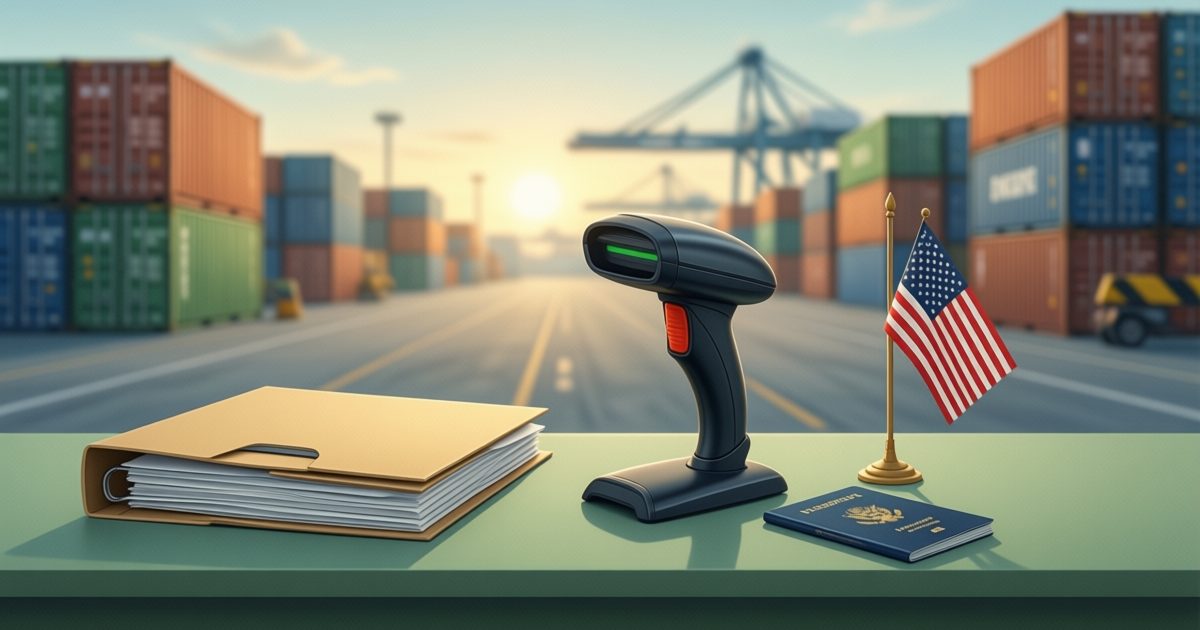
    The scale is striking. CBP officers at the Houston seaport intercepted roughly 12,000 fake Adidas jerseys, 4,500 counterfeit Adidas soccer balls, nearly 4,400 pairs of fake athletic shoes, and dozens of packages of counterfeit Apple-branded watches and earbuds carrying unauthorized FIFA logos — a haul valued at more than $6 million. In Miami, officers seized over 16,000 counterfeit Nike jerseys tied to an earlier interdiction of nearly 7,900 more. Cincinnati’s “Protect the Pitch” operation and Indianapolis’s “Operation Winner’s Circle” each intercepted dozens of shipments of fake jerseys, shorts, hats, and jewelry in just a few days of targeted enforcement. Investigators say most of the counterfeit goods originated in Hong Kong and mainland China, with some shipments routed through Mexico and Colombia.

    Why Fake Gear Keeps Reaching Shoppers Outside the US

    These seizures only capture what customs officers catch — plenty of counterfeit product still slips through and ends up on marketplaces and street vendors far from any US port. That’s especially true for shoppers outside the United States, who often can’t buy directly from Nike, Adidas, Fanatics, or the official FIFA store because those retailers either don’t ship internationally or quote shipping and duty costs that make the purchase pointless. Local resellers step into that gap, and not all of them are sourcing from legitimate channels. A jersey or watch that looks identical in a marketplace photo can turn out to be one of the exact items CBP has been pulling off the shelves.

    For anyone buying official team gear, collectibles, or electronics tied to the tournament, that’s a real risk: paying full price for a product that isn’t authentic, has no warranty, and may not even be safe (counterfeit electronics in particular are a common source of overheating and battery issues).

    The Safer Path: Buy From the Source, Ship It Yourself

    The most reliable way to guarantee you’re getting the genuine article is to buy directly from the authorized US retailer — Nike.com, Fanatics, NFL Shop, the official FIFA store — and have it forwarded from there. That’s the exact gap a package forwarding service like Viabox is built for: shoppers get a real US address, checkout normally on the official retailer’s US site at US prices, and Viabox receives the package and ships it on to wherever they actually are, whether that’s the Gulf, Mexico, Latin America, or Europe. No guessing about a marketplace seller’s supply chain, no counterfeit risk, no markup from a middleman reseller — just the same product US customers are buying, sent to your door.

    Worth Doing Right

    With the tournament’s knockout rounds drawing huge demand for official gear, counterfeiters are leaning in hard, and CBP’s numbers this month make clear how much fake product is actually moving. Buying from the authorized source and forwarding it yourself costs a little more attention up front, but it’s the difference between owning a genuine piece of this World Cup and owning one of the 23 million dollars’ worth of fakes that didn’t quite make it past the border. If you shop US retailers regularly, a US forwarding address is worth setting up now — it pays off well beyond this tournament.

    Ready to put your US address to work? Log in to your Viabox dashboard to manage shipments and consolidate packages — or create your free US address in minutes.

    Go to my Viabox dashboard →

  • USMCA Wasn’t Renewed on July 1: What It Means for Mexico Orders

    USMCA Wasn’t Renewed on July 1: What It Means for Mexico Orders

    On July 1, 2026, the United States, Mexico, and Canada wrapped up the required six-year joint review of the USMCA trade agreement — and the outcome wasn’t what many expected. The US declined to agree to renew the deal in its current form for another 16-year term. Instead, USMCA now shifts into a year-by-year review process under the agreement’s Article 34.7.4, continuing until either the three countries agree to a full extension or the pact reaches its built-in expiration in 2036.

    That sounds alarming in a headline, but it’s important to separate the political signal from what’s actually changed on the ground today.

    What actually happened

    The joint review is a built-in checkpoint, not a renegotiation deadline. US Trade Representative Jamieson Greer’s office confirmed the review took place as scheduled, and administration officials — including Commerce Secretary Howard Lutnick and trade advisor Peter Navarro — have publicly cited frustration over two issues: Chinese goods allegedly being routed through Mexico to sidestep US tariffs, and a desire for more automotive manufacturing growth to shift toward the US. Rather than commit to another 16 years of the deal as-is, the US chose to keep reviewing it annually.

    What doesn’t change

    This is the part that matters most for anyone shopping US stores and shipping to Mexico: USMCA itself remains fully in force. Preferential tariffs, rules of origin, investment protections, and dispute settlement mechanisms are all still operating exactly as they were on June 30. Nothing about the agreement expired, and nothing was suspended. Qualifying trade between the US, Mexico, and Canada continues tariff-free. If you shipped something last week, the rules haven’t moved under your feet this week.

    Why it still matters to you

    The review outcome is a signal, not a shock. It tells resellers and frequent shoppers that trade terms between the US and Mexico are now up for reassessment every year instead of settled for over a decade, and that the current administration is specifically focused on how goods move through Mexico. For small resellers who source inventory from US retailers — electronics, fashion, beauty products, and similar categories that make up a lot of cross-border resale volume — that’s a reason to pay closer attention to trade news over the next several months rather than assume the status quo is locked in for years. Annual reviews mean annual chances for new tariff lines, new documentation requirements, or new scrutiny on specific product categories to appear with much shorter notice than in the past.

    It’s also a reminder that most of what USMCA governs — commercial supply chains, manufacturing rules of origin, large-scale trade flows — is a different animal from an individual buying sneakers or a phone case from a US store and having it forwarded home. Personal shipments are typically handled under Mexico’s own import and duty rules for incoming parcels, not the commercial preferential-origin framework at the center of this review. But when trade policy gets more volatile at the top, it tends to filter down eventually, whether through carrier surcharges, customs processing changes, or new paperwork requirements.

    How to stay ahead of it

    The practical move right now isn’t to panic, it’s to keep your shipping setup flexible. This is exactly the kind of environment where a US forwarding address earns its keep: you’re not locked into a single retailer’s shipping terms or a single carrier’s rate table, and you’re not paying a monthly fee to keep that flexibility on standby. Viabox gives you a real US address to shop any store, holds your packages, and only charges when you actually ship — so if customs rules or costs shift for a particular product category, you can adjust how and when you consolidate and forward without being locked into anything long-term.

    Trade policy between the US and Mexico is entering a period of yearly check-ins instead of decade-long certainty. That’s worth watching, but it’s not a reason to change how you shop today. Keep an eye on the news, keep your shipments flexible, and let your forwarder absorb the logistics complexity so you don’t have to.

    Ready to put your US address to work? Log in to your Viabox dashboard to manage shipments and consolidate packages — or create your free US address in minutes.

    Go to my Viabox dashboard →

  • EU’s New €3 Parcel Duty Is Already Pushing Shein and Temu Out

    EU’s New €3 Parcel Duty Is Already Pushing Shein and Temu Out

    On July 1, 2026, the European Union closed one of the biggest loopholes in global e-commerce. For two decades, any parcel worth less than €150 could cross into the EU duty-free. Now every low-value parcel from outside the bloc gets hit with a flat €3 customs charge for each distinct item type it contains. A box with five identical t-shirts pays €3 once. A box with a t-shirt and a watch pays €6, because those are two different tariff lines.

    Why This Rule Exists

    The EU says the old exemption had turned into a structural subsidy for ultra-cheap, direct-from-China shipping. Regulators estimate roughly 5.9 billion low-value parcels entered the EU duty-free in 2025 alone — about 12 million a day, up from 1.4 billion just three years earlier. Meanwhile, EU retailers like H&M and Gap were paying full duties on every shipment. The new €3 charge is meant to level that playing field until 2028, when the EU’s planned Customs Data Hub takes over with a permanent tariff structure.

    Shein and Temu Are Already Reacting

    The fastest-moving evidence that this rule has teeth isn’t a government report — it’s what the platforms themselves are doing. Within days of the change, Google Shopping data showed Temu had cut its EU ad visibility roughly in half, and Shein appeared to be scaling back its European presence altogether rather than absorb the fee on millions of daily low-value orders. AliExpress, by contrast, increased its ad spend, betting it can compete without retreating. Whichever strategy wins, the message to shoppers is the same: the era of guaranteed rock-bottom, duty-free hauls from these platforms is over, at least inside the EU.

    The Math That Actually Matters for You

    Here’s the detail that gets lost in the headlines: a flat €3-per-item fee is regressive. It barely dents the price of something that already costs real money, but it can add 10% or more to a $5 phone case or a $8 t-shirt. That means the shoppers who feel this least are the ones buying fewer, better things — genuine electronics, name-brand cosmetics, real apparel from established retailers — rather than large hauls of ultra-cheap, disposable items with dozens of different SKUs per order.

    That’s also true for parcels shipped from the US, which fall under the same sub-€150 rule when declared through the EU’s import scheme. If you’re using a US forwarding address to shop Amazon, Best Buy, Sephora, or a specific brand’s US site, your order usually has fewer distinct line items than a typical Shein or Temu haul, and the goods are worth more per item — so the flat fee is a smaller percentage of what you’re already paying. This is exactly the kind of shift where a service like Viabox, which gives you a real US address and consolidates purchases from multiple stores into one shipment, works in your favor: fewer separate parcels and more deliberate buying means less duty exposure overall, not more.

    This Isn’t Just an EU Story

    The EU is the biggest market to move this year, but it’s part of a broader pattern. Countries with historically tight de minimis thresholds — including several in the Gulf and Latin America — already tax most low-value imports in some form, and more markets are tightening rules rather than loosening them in 2026. The direction of travel everywhere is the same: fewer free passes for high-volume, low-value shipping, and more scrutiny on declared values and item counts.

    What to Do About It

    • Consolidate orders from multiple US stores into a single shipment where possible, to reduce the number of separate customs entries you generate.
    • Favor fewer, higher-value purchases over large hauls of many cheap, different items — the flat per-line fee hits those hardest.
    • Check whether your forwarder declares accurate, itemized values; the EU has explicitly flagged mis-valued declarations as part of what it’s cracking down on.
    • Budget for the new fee on any sub-€150 shipment, whether it comes from China or the US, and treat it as a fixed cost of ordering internationally rather than a one-off surprise.

    If you shop US stores regularly and ship abroad, this is a good moment to rethink how you consolidate and time your orders. That’s exactly what Viabox’s US address and package consolidation are built for — making sure your shipments are as efficient, and as duty-light, as possible.

    Ready to put your US address to work? Log in to your Viabox dashboard to manage shipments and consolidate packages — or create your free US address in minutes.

    Go to my Viabox dashboard →

  • The 10% US Tariff Surcharge Is Set to Expire July 24

    The 10% US Tariff Surcharge Is Set to Expire July 24

    A three-week countdown is running on one of the biggest cost drivers behind US retail prices this year. The Section 122 global tariff surcharge — a 10% charge the administration placed on imports from virtually every country starting February 24, 2026 — is set to expire automatically on July 24, 2026, whether or not the legal fight over it is resolved.

    What’s actually happening

    Section 122 of the Trade Act of 1974 lets the executive branch impose temporary import restrictions to address balance-of-payments issues, but it caps them at 150 days unless Congress votes to extend them. That clock runs out at 12:01 a.m. ET on July 24, 2026. On May 7, 2026, the U.S. Court of International Trade ruled in Oregon v. United States and Burlap and Barrel, Inc. v. United States that the surcharge was unlawful in the first place. Just five days later, the U.S. Court of Appeals for the Federal Circuit stayed that ruling, which means the tariff is still being collected on imports right now while the appeal plays out. Regardless of how the appeal resolves, the statutory 150-day limit means the surcharge lapses on its own next month unless lawmakers act — and an extension is considered unlikely.

    Why this matters if you shop US stores from abroad

    Tariffs on imported goods don’t stay with the importer — retailers and suppliers build that cost into shelf prices across the board, not just on the specific items being taxed. For months, a flat 10% surcharge sitting on top of an already complicated stack of country- and category-specific tariffs has been part of what US brands factor into their pricing. When a cost like that lifts, even temporarily, it’s one less thing pushing prices up on the electronics, apparel, beauty, and fashion goods that keep showing up in demand from international buyers and resellers.

    That doesn’t mean prices flip overnight on July 25 — retailers don’t reprice instantly, and the U.S. Trade Representative is also running two separate Section 301 investigations covering 76 potential tariff determinations that are expected to wrap up before the July 24 deadline, so this isn’t the last word on U.S. trade costs this year. But for shoppers and small resale businesses who buy in bulk from U.S. retailers, a genuine reduction in one major tariff layer — even a partial or temporary one — is worth watching, especially heading into back-to-school and pre-holiday buying season.

    The bigger picture: tariffs are getting more complicated, not less

    What’s clear from the last year of Section 122, Section 301, and de minimis changes is that U.S. import costs now depend heavily on what you’re buying, where it originates, and exactly when it ships. That’s a lot for an individual shopper or a small reseller to track — which is exactly the kind of complexity a package forwarding address is built to absorb. Viabox customers shop U.S. stores using a real Portland, Oregon address, and duties and import rules on the receiving end are handled separately from whatever is happening with U.S. tariff policy on the way in. You’re not trying to time a court ruling to get a good price — you’re just buying when the deal is good and shipping when you’re ready.

    What to watch next

    • Whether the Federal Circuit rules on the merits before July 24, or whether the surcharge simply lapses on schedule
    • Whether Congress moves to extend Section 122 authority — currently seen as unlikely
    • Results of the two pending Section 301 investigations, which could introduce new tariffs even as this one expires

    None of this changes how you shop — it just changes what things cost. If you’ve been holding off on a US order waiting for prices to settle, the next few weeks are worth keeping an eye on.

    Ready to put your US address to work? Log in to your Viabox dashboard to manage shipments and consolidate packages — or create your free US address in minutes.
    Go to my Viabox dashboard →

  • 4th of July Sales Are Live: Shop US Deals From Anywhere

    4th of July Sales Are Live: Shop US Deals From Anywhere

    The Biggest Summer Sale Window Is Open Right Now

    Every July, US retailers run some of their deepest discounts of the year around Independence Day. In 2026, those sales launched between June 29 and July 1 and are running through roughly July 8 — which means international shoppers have a narrow window right now to buy products at prices that won’t reappear until Black Friday.

    Forbes, CNN Underscored, and NBC News all confirmed that this year’s 4th of July sales are live across Amazon, Wayfair, Ulta Beauty, Home Depot, and dozens of other US platforms simultaneously. The discounts are broad: electronics, mattresses, outdoor furniture, beauty, appliances, and fashion are all in scope.

    What’s Actually on Sale Right Now

    Here’s a quick look at what US retailers are actively discounting through the holiday weekend:

    • Electronics: Amazon has up to 60% off from brands including Apple, Ninja, Shark, and Hanes. Samsung cut the price of its 2026 65-inch Mini-LED TV — one of the first discounts on that model — by $100 through the holiday.
    • Outdoor and home: Wayfair is running up to 50% off outdoor furniture. Home Depot has an active 4th of July sale on tools and appliances.
    • Mattresses and bedding: DreamCloud is offering up to 66% off. Helix Sleep is at 30% off through July 12. Cozy Earth has 60% off pajamas and bedding.
    • Beauty: Ulta Beauty has up to 40% off makeup, skincare, and hair care.
    • Fashion: J. Crew’s summer sale includes an extra 60% off already-reduced items. Zappos added an extra 20% off with a promo code.

    CNN Underscored tracked over 111 active deals across categories. These are genuine seasonal clearances — US retailers historically move summer inventory ahead of back-to-school season — not manufactured price drops.

    Why International Shoppers Often Miss These Deals

    The problem is structural. Most major US retailers don’t ship internationally, or they do so at rates that erase the discount. A Wayfair piece of furniture marked down 50% to $200 looks less appealing if direct international shipping adds $120 and takes three weeks with uncertain customs handling.

    Even when international shipping is technically available, US retailers frequently restrict it to a short list of countries, reject non-US payment methods, or layer on duties at checkout that a freight forwarder would handle more cheaply. The practical result: 4th of July sales effectively exist only for people with a US address — unless shoppers know how to route around that.

    How to Get US Holiday Prices Shipped to Your Door

    The cleanest workaround is a US package forwarding service. Viabox, for example, gives you a real US street address in Portland, Oregon, where any US retailer can deliver. Once your purchases land at the warehouse, they’re forwarded internationally — with the option to consolidate multiple orders into one outbound shipment, which is where the real savings add up.

    This matters specifically for a sale like 4th of July, where you might be buying from three different retailers: an electronics item from Amazon, furniture from Wayfair, and a beauty order from Ulta. Three separate international shipments at full freight rates is expensive. One consolidated package cuts that cost significantly, especially for buyers in the Gulf, Mexico, or Southeast Asia where per-shipment minimums are higher.

    There are no monthly fees, so if you’re using the address only during sale windows, you’re not paying to keep it active the rest of the year.

    A Few Things to Keep in Mind Before You Shop

    Holiday sales can end earlier than advertised if stock runs out. A few practical notes before you buy:

    • Check your destination’s import threshold. Knowing your country’s de minimis limit prevents customs surprises on arrival. Gulf countries generally allow generous personal import values; EU countries now apply a €3 per-item duty on all imports regardless of value since July 1.
    • Factor in dimensional weight, not just purchase price. Mattresses and outdoor furniture are high-volume items. Run the cubic dimension math before committing to a large piece.
    • Prioritize US-only inventory. Niche electronics brands, specific appliance models, and US-only fashion lines offer the clearest value for international buyers even after freight, because they’re simply not available at home.

    The 4th of July sale window is one of three genuinely strong buying opportunities each year alongside Black Friday and Amazon Prime Day (which wrapped up on June 26). If there’s something on your list, the next few days are one of the better moments to act — most promotions end by July 8.

    Ready to put your US address to work? Log in to your Viabox dashboard to manage shipments and consolidate packages — or create your free US address in minutes.

    Go to my Viabox dashboard →

  • Amazon’s June 29 Seller Rule: Better Ship Windows for US Shoppers

    Amazon’s June 29 Seller Rule: Better Ship Windows for US Shoppers

    If you’ve ever ordered from a US Amazon seller and had a shipping estimate turn out to be wrong — by a day, by three, sometimes by a week — you know how that throws off your plans. For anyone using a US forwarding address to shop American stores and ship internationally, a late departure from the seller’s warehouse can cascade into a delayed consolidation window and a later international dispatch. As of today, June 29, 2026, Amazon is closing that loophole.

    Amazon’s new handling time enforcement policy went live this week across its entire US marketplace, requiring every seller who ships their own orders to configure accurate, SKU-level handling times that match their real shipping behavior. This applies to all seller-fulfilled (FBM) products — items shipped directly from the merchant’s own warehouse, not from Amazon’s fulfillment centers.

    What the Policy Actually Requires

    Handling time is the window between when a customer places an order and when the seller hands the package to a carrier. Until now, sellers could self-report this figure without consequence if they underestimated it. Under the new policy, sellers must either opt into Amazon’s Automated Handling Time (AHT) system — which calculates the appropriate window from actual historical shipping data — or manually configure a realistic, accurate handling time for each SKU. Listings that don’t comply get flagged, and after a 30-day correction window, Amazon overrides the seller’s setting automatically.

    The crackdown extends to Amazon’s Premium Shipping program, which marks certain seller-fulfilled items with a guaranteed delivery promise. Sellers must now maintain a 93.5% on-time delivery rate, reviewed weekly. Three consecutive weeks below that threshold triggers removal from the program. The message to merchants is clear: ship when you say you’ll ship, or lose the badge.

    Why Seller-Fulfilled Listings Matter More Than They Look

    Most people think of Amazon primarily as FBA — the system where Amazon’s own warehouses stock and ship products. And FBA is dominant: roughly 82% of Amazon sellers use it for at least some of their inventory. But about 34% of active sellers still fulfill orders themselves, and third-party sellers as a group now account for 61% of all Amazon unit sales — an all-time high. That translates to tens of millions of listings where handling times were, until today, effectively self-regulated.

    The categories most likely to be seller-fulfilled include specialty tools, independent fashion and beauty brands, niche home goods, small-batch health and wellness products, and many electronics accessories. These are exactly the kinds of products that attract international shoppers to US marketplaces — where prices, selection, and brand availability often can’t be matched locally.

    What This Means for Shoppers Using a US Address

    If you use a US forwarding address to receive packages before sending them internationally, accurate handling times have real practical value. You can plan whether a package will arrive in time to consolidate with other incoming items, whether to ship it separately, or whether to hold. When a seller’s estimate is off by two or three days, that can push your international dispatch by a week or more.

    The June 29 enforcement means that for the millions of seller-fulfilled listings, the estimated ship date shown in your order confirmation should now reflect how the seller actually operates — not an optimistic number set at account creation and never updated. That’s a meaningful improvement in planning accuracy, particularly for shoppers coordinating deliveries across multiple US stores and timing them around a single outbound international shipment.

    The Catch: Most of These Sellers Still Won’t Ship to You Directly

    Here’s the irony baked into this news: the very sellers now being held to honest handling times are largely the same ones who restrict delivery to US addresses only. Independent marketplace merchants frequently don’t ship internationally, citing customs complexity, import duties, and the difficulty of managing international returns. The specialty and niche products most worth importing are often unavailable for direct global delivery — full stop.

    That’s the gap a US package forwarding service fills. With a real US street address in Portland, OR, you can order from any US retailer or Amazon marketplace seller — FBA or seller-fulfilled — have the packages received on your behalf, and choose when and how to ship them internationally. Viabox provides that address with no monthly subscription; you pay only when you ship. Consolidating multiple packages into one outbound shipment cuts the per-item forwarding cost significantly, and you control the timing around your own schedule.

    The Bottom Line

    Amazon’s June 29 handling time enforcement is a quiet but practical win for anyone who depends on accurate ship-date information to plan their logistics. It won’t change which products are available for international delivery — but it makes the part of the process you can plan around (timing and consolidation) more predictable and reliable than it’s been before.

    If you’re shopping US stores from abroad and want access to sellers who won’t ship to your country directly, a US forwarding address removes the barrier. Sign up for a free Viabox account, get a real Portland, OR address, and start ordering from any US store — today’s policy change just made the experience a little smoother.

    Ready to put your US address to work? Log in to your Viabox dashboard to manage shipments and consolidate packages — or create your free US address in minutes.

    Go to my Viabox dashboard →

  • US Stores Are Cutting Prices as $40B in Tariff Refunds Flow

    US Stores Are Cutting Prices as $40B in Tariff Refunds Flow

    If US store prices felt noticeably higher through 2025, there was a concrete reason — and that reason is now unwinding quickly. A wave of court-ordered tariff refunds is reaching US retailers, and several major chains have already begun cutting prices in response. For international shoppers who buy from US stores, the timing matters.

    What Happened: The IEEPA Tariff Story in Brief

    In 2025 the US government imposed sweeping emergency import tariffs under the International Emergency Economic Powers Act (IEEPA), covering hundreds of billions of dollars in goods entering the US market. Prices on US retail goods rose across electronics, clothing, home goods, and sporting equipment as importers passed the new duties along to buyers. Then, on February 20, 2026, the US Supreme Court let stand a lower court ruling that the IEEPA tariffs were unlawful. US Customs and Border Protection (CBP) was ordered to refund every dollar collected.

    Phase 2 of the Refund Process Launches June 29

    The refund operation has moved faster than most observers expected. By the end of June 2026, CBP had disbursed more than $40 billion in IEEPA tariff refunds, with over $95 billion queued for processing through a dedicated government portal called CAPE (Consolidated Administration and Processing of Entries). On June 29, 2026, CBP launched Phase 2 of the program, extending coverage to a new class of entries flagged for reconciliation. More importers and retailers will receive their money back over the coming weeks as Phase 2 works through the backlog.

    Retailers Are Already Cutting Prices

    Unlike some cost recoveries that businesses quietly absorb, several major US retailers have moved to pass IEEPA refunds directly to shoppers:

    • BJ’s Wholesale Club used tariff refunds to reduce merchandise prices, reporting roughly half a point of price deflation across its retail assortment.
    • Costco’s CEO publicly committed to returning the refund value to members, stating the company plans to “return to our members in some form the portion of tariffs that were passed on to them.”
    • Analysts at Digital Commerce 360 report a wider wave of rollbacks expected across consumer electronics, apparel, home goods, and beauty products through mid-2026.

    The pressure is competitive as much as it is logistical: retailers that received refunds and don’t lower prices risk losing customers to rivals who do.

    Which Product Categories Should Drop First

    IEEPA tariffs hit hardest on imported finished goods. The categories most likely to see visible price rollbacks in mid-2026 are:

    • Consumer electronics and accessories
    • Clothing, footwear, and athletic wear
    • Home goods, kitchen appliances, and furniture
    • Sports equipment and outdoor gear
    • Beauty and personal care products

    Retailers in these segments had the largest duty exposure during 2025 and have the most refund money to work with. Prices won’t reset overnight — inventory cycles and margin decisions create a lag — but the direction is clear: US retail is getting cheaper, and the Phase 2 launch accelerates that momentum.

    What This Means for International Shoppers

    If you buy from US stores and ship internationally, this directly affects what you pay. Goods that became noticeably more expensive through 2025 should begin returning toward pre-tariff prices as retailers work through their refunds over the coming months. This is a good moment to revisit items on your wish list — US store pricing on electronics, fashion, and home goods may be lower right now than at any point in the past year, and the refund-driven deflation is still in motion.

    One practical challenge for international buyers: many US retailers still limit shipping to domestic addresses, and international checkout options often charge steep markups. Using a US package-forwarding address through a service like Viabox lets you shop any US store at US retail prices — then consolidate your packages and ship them to your door worldwide. You pay what the US customer pays, including any markdown that just got applied.

    Two Important Caveats

    The IEEPA refunds cover tariffs imposed under the 2025 emergency orders specifically. They do not reverse Section 301 tariffs on Chinese-origin goods, which remain in effect. If the product you want originates primarily from China, US retail prices in that category may not fall as sharply as in other segments.

    Your destination country’s import duties are also unchanged. When packages arrive, your local customs authority will still assess duties based on declared value and product category. Before ordering high-value items, check the applicable rate for your country — that part of the equation has not shifted.

    The Window Is Open

    Phase 2 of the US tariff refund process launching June 29 is a meaningful milestone: it signals that the refund cycle is broadening and the price relief reaching US retailers will deepen through the rest of the year. For international shoppers who have been waiting out elevated prices, that wait is over. The best prices on US goods in the past twelve months are arriving now — shop accordingly.

    Ready to put your US address to work? Log in to your Viabox dashboard to manage shipments and consolidate packages — or create your free US address in minutes.

    Go to my Viabox dashboard →

  • EU’s €150 Duty Exemption Ends July 1: What Shoppers Must Know

    EU’s €150 Duty Exemption Ends July 1: What Shoppers Must Know

    Starting Thursday, July 1—four days from now—a rule that made importing small packages into Europe nearly cost-free disappears. If you shop US stores and ship to an EU address, this change affects every order you place from here on. Here is what it means and what to do about it.

    The Rule That Is Ending

    For decades, the EU operated a de minimis customs threshold: goods valued at €150 or less entered any EU member state completely free of import duty. VAT still applied on arrival, but no customs duty. This exemption covered an extraordinary volume of trade—roughly 4.6 billion low-value consignments entered the EU in 2024, approximately 12 million parcels per day. For international shoppers buying fashion, accessories, electronics, and household goods from US retailers, the exemption made the math simple: shop the price, pay VAT, move on.

    What Changes on July 1, 2026

    The European Commission has confirmed the €150 customs duty exemption is abolished on July 1, 2026. In its place, a flat-rate customs duty of €3 applies per item on consignments valued under €150. The duty is charged against each distinct product in a shipment—classified separately by tariff heading—not against the parcel as a whole. A single order containing three different products carries €9 in flat duty, regardless of the items’ individual prices.

    This interim rate runs until July 1, 2028, when the EU Customs Data Hub for ecommerce goes online and full product-specific duty rates based on each item’s HS classification take over. Because EU VAT is calculated on total landed value including duty, your effective VAT bill on dutiable orders will also be marginally higher than before.

    A Second Fee May Follow in Late 2026

    Separate from the €3 customs duty is a proposed EU-wide customs handling fee—expected around €2 per parcel—still under negotiation between the European Council and the European Parliament. An amount and implementation date are expected from autumn 2026. It has not been finalized, but the direction is clear: low-value imports into the EU are no longer a customs-light experience.

    The Real Cost for Shoppers Buying from US Stores

    The practical impact depends on what you order and how often.

    • Small, inexpensive items feel the pinch most. A $15 phone case that previously arrived duty-free now carries €3 in flat customs duty—a significant surcharge on a low-priced purchase before shipping costs or VAT are added.
    • Multi-item orders accumulate duty quickly. Five different products in one shipment means €15 in flat duty, charged item by item regardless of value.
    • Orders already over €150 were already subject to standard EU import duties, so those shipments see no structural change to the duty calculation itself.
    • Packages already in transit and clearing EU customs before July 1 still qualify for the old exemption. Factor current transit times into any decision to expedite a pending order.

    Why Consolidating US Purchases Makes More Sense Now

    Because the €3 duty is charged per item—not per parcel—the total duty on a given set of purchases is the same whether you send one box or five. What consolidation changes is the number of customs events your goods trigger. Carriers typically impose their own clearance or handling fees per parcel processed at the border; fewer shipments mean fewer of those charges stacking up on top of the duty.

    Routing purchases through a US package consolidation service before they leave the country lets orders from several different US retailers travel to Europe as a single shipment. Viabox provides a real US warehouse address, holds packages as they arrive from any US store, and ships them as one consolidated box internationally on your schedule. That model was already efficient for cutting per-pound shipping costs; the new fee environment adds a second practical reason to consolidate before the Atlantic crossing.

    What to Do Before and After July 1

    • Orders you want cleared under the old rules must reach EU customs before July 1. Check current transit times if you are deciding whether to expedite a pending shipment.
    • For orders shipping after July 1, add €3 per item to your landed-cost estimate before checkout. The price displayed on a US site is not the price that arrives at your door.
    • Ask your carrier about their separate customs clearance or handling fee—this charge is distinct from the €3 duty and varies by carrier and route.
    • If you regularly buy from multiple US stores, consolidating purchases at a US address before shipping internationally reduces the number of per-parcel carrier charges triggered at customs.

    The full EU customs overhaul—with standard product-specific rates for all consignments—arrives in 2028. For now, the €3 flat rate applies to every item in every sub-€150 order entering the EU, and the cost of shopping US stores and shipping to Europe has a new line item attached to every delivery.

    If you ship US purchases into Europe regularly and want to keep costs manageable, Viabox gives you a free US address, free package consolidation, and worldwide door-to-door shipping with no monthly fee. Consolidating before you cross the Atlantic is now smarter than it has ever been.

    Ready to put your US address to work? Log in to your Viabox dashboard to manage shipments and consolidate packages — or create your free US address in minutes.

    Go to my Viabox dashboard →

  • USPS July 12 DIM Weight Change: What International Shoppers Must Know

    USPS July 12 DIM Weight Change: What International Shoppers Must Know

    What Is Changing and When

    On July 12, 2026, the United States Postal Service will change how it calculates dimensional (DIM) weight for Priority Mail Express, Priority Mail, USPS Ground Advantage, and Parcel Select. The key number: the DIM divisor drops from 166 to 139. At the same time, USPS will begin rounding all fractional package dimensions up to the next whole inch before calculating volume.

    If those terms are unfamiliar, the practical effect is straightforward: the same physical box will now produce a higher billable weight, and a higher shipping charge, than it did the day before.

    How Dimensional Weight Pricing Works

    Every major carrier charges you whichever is greater: the actual scale weight of your package, or its dimensional weight. Dimensional weight is calculated by multiplying a box’s length, width, and height in inches, then dividing by the DIM divisor. The carrier bills you for the higher of the two numbers.

    To see what the July 12 change means in practice, consider a box measuring 16 by 14 by 10 inches—a common size for shoes, electronics accessories, or a small clothing order. Its volume is 2,240 cubic inches. Under the current USPS divisor of 166, the dimensional weight is roughly 13.5 pounds. Under the new divisor of 139, that same box calculates to about 16.1 pounds—a 19 percent increase in billable weight, even if the actual contents weigh only two or three pounds.

    FedEx, UPS, and DHL have used a DIM divisor of 139 for years. As of July 12, USPS aligns with them. There is now no mainstream US carrier offering a more lenient dimensional weight formula for larger packages.

    Why This Matters If You Shop US Stores and Ship Internationally

    If you use a US forwarding address to shop American retailers and ship internationally, you are already subject to DIM weight pricing on the outbound leg via FedEx, UPS, or DHL. The USPS change is a signal that the era of lenient bulk pricing is over across the board—and a good prompt to review how much dimensional weight is adding to your shipping bills right now.

    Several factors compound the problem for international shoppers:

    • US retailers routinely overpackage. A single pair of sneakers or a set of phone accessories may arrive at a forwarding warehouse inside a box twice as large as necessary. The actual product weighs two pounds; the DIM weight calculates to eight or more.
    • Shipping multiple purchases separately multiplies the cost. Five individual retailer boxes forwarded one at a time means five separate DIM weight calculations, five base handling charges, and five chances to pay for air inside cardboard.
    • Lightweight but bulky categories—beauty sets, apparel, supplements, home accessories—are the most exposed. These items are often sold in attractive retail packaging that is not designed with shipping efficiency in mind.

    The One Strategy That Cuts DIM Weight Costs

    The most reliable way to reduce dimensional weight charges is consolidation: combining multiple incoming purchases into a single, tightly packed outbound shipment. When a forwarding warehouse opens the original retailer boxes, removes void fill, and repacks everything into one right-sized box, the dimensional volume typically drops substantially. You also pay one base shipping charge instead of several.

    Viabox provides consolidation as part of its standard service. Packages from any number of US retailers arrive at the Portland, Oregon warehouse, and the team can combine them into one shipment before forwarding worldwide. For shoppers ordering from several stores in a single buying run, the reduction in DIM weight alone often more than offsets the small consolidation fee.

    What to Do Before July 12

    If you have packages sitting at a US forwarding address right now, it is worth comparing the cost of shipping them today versus waiting. Packages that fall into the bulky-but-light category will get more expensive to forward once the new USPS formula takes effect, and FedEx, DHL, and UPS are already priced at the tighter standard.

    Going forward, a few practical steps keep costs down:

    • Batch your orders. Instead of forwarding each purchase the moment it arrives, let several accumulate and consolidate them into one shipment.
    • Request repacking. Ask your forwarding warehouse to remove excess void fill and use the smallest box that fits your items safely.
    • Check DIM weight on every quote. If the dimensional weight is more than double the actual weight, a smaller or reshaped box will save real money.
    • Compare carriers. For some destinations and package profiles, the rate differences between USPS international services, FedEx, and DHL can be significant—get a quote for each before confirming.

    The Bigger Picture

    The USPS change is part of a longer industry trend: carriers are increasingly pricing shipments to reflect the physical space a package occupies in a truck or plane, not just how heavy it is. With every major US carrier now using essentially the same DIM formula, there is no longer a low-cost workaround for bulky packages. The international shoppers who will feel this least are those who treat consolidation and smart packing as habits rather than afterthoughts—because the cost of empty cardboard is now priced into every single shipment.

    Ready to put your US address to work? Log in to your Viabox dashboard to manage shipments and consolidate packages — or create your free US address in minutes.

    Go to my Viabox dashboard →

  • World Cup 2026: Get US Official Gear Shipped Anywhere

    World Cup 2026: Get US Official Gear Shipped Anywhere

    The FIFA World Cup 2026 kicked off on June 11 and runs through July 19, with 48 nations competing across 16 cities in the United States, Mexico, and Canada. For millions of fans worldwide, that means one thing: the world’s best selection of official jerseys, scarves, balls, and collectibles is on US shelves right now — and most international shoppers have no direct way to buy from those stores.

    Why US Stores Have the Best World Cup Merchandise

    Because the United States is the primary host nation, American retailers launched the deepest and earliest World Cup 2026 inventory. The official FIFA Store, Fanatics, Soccer.com, Adidas US, Nike US, Target, and Dick’s Sporting Goods all stocked host-city exclusives, limited-edition kits, and fan bundles that are not available at their international counterparts — or that sell out abroad well before they appear locally.

    Host-city co-branded scarves are exclusive to the US FIFA Store. Fanatics carries national team jerseys for all 48 qualifying nations. Nike US launched tournament-edition boots in colorways sold only in US markets. These are not minor variations — they are items serious fans want, and many are already surfacing as hard-to-find listings on secondary markets before the knockout rounds even finish.

    The Shipping Wall Most International Fans Hit

    Try to buy a jersey on Fanatics and ship it to Saudi Arabia, Indonesia, or Brazil. In most cases you will see the same message: “We don’t ship to your country.” Even retailers that technically offer international checkout often quote carrier rates that match or exceed the cost of the item itself. A $60 jersey routed through express international delivery can arrive with $65 in shipping and handling fees attached — before any local import duties.

    International direct shipping from US stores is genuinely complex: export documentation, carrier agreements, duty calculation, and last-mile partnerships in each destination country. Only a handful of large retailers can manage it at scale, and even they exclude large portions of the world.

    How Package Forwarding Opens Every US Store

    A US package-forwarding service gives you a real US street address — one that every American retailer accepts the same as any domestic customer. You shop from any store, your purchases arrive at your US address, and the forwarding service ships everything on to your actual location. Viabox operates out of Portland, Oregon, a sales-tax-free state, which keeps your upfront purchase cost lower than shipping through many other US hubs.

    The flow is straightforward: sign up, get your US address, paste it at checkout on Fanatics or the official FIFA Store or Nike US, then request a shipment once your items arrive at the warehouse. You choose your preferred international carrier and speed.

    One especially useful feature for World Cup shopping is package consolidation. If you order a jersey from the FIFA Store, a scarf from Soccer.com, and a pair of boots from Adidas US on three separate days, the warehouse can hold all three and combine them into one outbound parcel before forwarding. International shipping costs are driven primarily by weight and volume; consolidating multiple light packages typically cuts your bill substantially compared to sending each item individually as it arrives.

    Timing: Three Weeks Left and Inventory Is Moving Fast

    The World Cup final is July 19. From today, the full knockout stage remains — quarterfinals, semifinals, and the final itself — which is exactly when demand for official merchandise spikes hardest. When a team advances unexpectedly, its jersey can sell out across US retailers within hours.

    Realistic shipping timelines to plan around: standard international shipping from a Portland warehouse to the Gulf typically takes 5–10 business days; to Europe, 7–12 days; to Southeast Asia, 8–14 days. Expedited options roughly halve those figures. To receive merchandise before the final, placing your order before July 5 gives you a comfortable margin with standard shipping.

    Practical Tips When Shopping From US Stores

    • Prioritize host-city exclusives first. Items like city co-branded scarves and limited tournament bundles are only available at US retailers and will not appear in international retail channels.
    • Check the return policy before ordering. Most major US sports retailers accept returns to a US address, so your forwarding warehouse can receive an exchange if sizing is off.
    • Factor in local import duties. Apparel may attract customs duties on arrival in your country — these are paid to local customs authorities and are separate from what you pay your forwarding service.
    • Consolidate before shipping. Ordering from multiple stores over a few days and shipping everything together in one parcel is almost always cheaper than forwarding each package the moment it arrives.

    The World Cup comes around once every four years. With the United States hosting, US retailers are stocked with a breadth of global merchandise that will not be replicated elsewhere. If you have been sitting on the fence about setting up a US forwarding address, the next three weeks give you a concrete and time-sensitive reason to act.

    Ready to put your US address to work? Log in to your Viabox dashboard to manage shipments and consolidate packages — or create your free US address in minutes.

    Go to my Viabox dashboard →