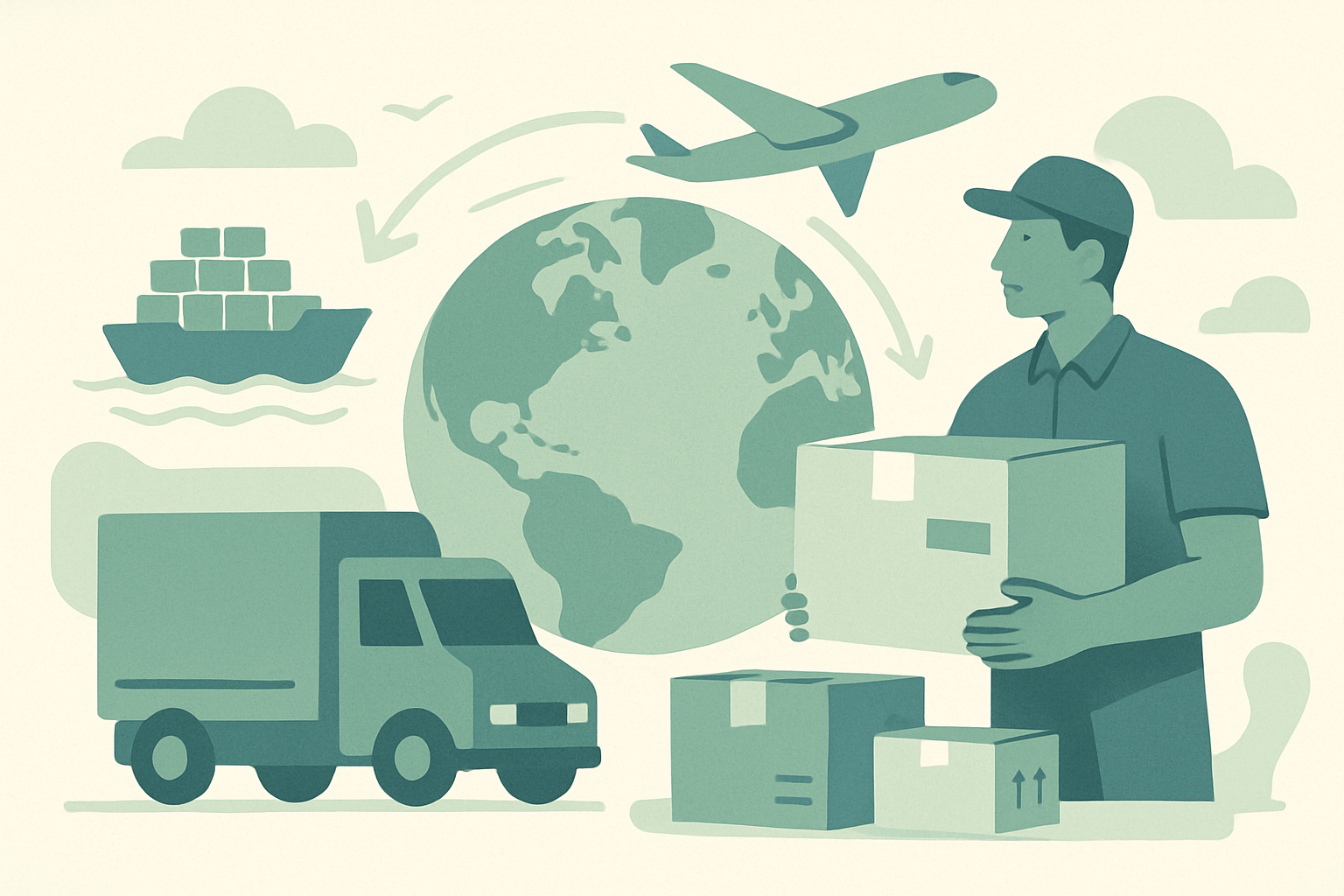
On May 28, 2026, DHL eCommerce and the United States Postal Service announced a long-term exclusive partnership valued at over $10 billion — the largest expansion in the two companies’ 25-year relationship. At almost the same moment, FedEx publicly declared it is stepping back from chasing mainstream consumer parcel volume. Together, these two developments are quietly reshaping the carrier landscape behind every US address, including the ones international shoppers use to receive packages before forwarding them home.
What the DHL-USPS Deal Actually Does
The structure of the deal is straightforward. DHL eCommerce handles the upstream work: collecting packages from retailers and merchants, sorting them through its 19 fully automated US hubs, and moving them via its own air and ground linehaul network. The United States Postal Service then takes over for the final mile — the last leg to a doorstep or, for international shoppers, to a US package-forwarding warehouse.
The USPS final-mile network is difficult to replicate. It covers more than 41,550 ZIP codes, reaches over 170 million delivery points, and operates six days a week. The new exclusive agreement also allows DHL eCommerce to handle heavier packages and offer mid-tier speed and price options that previously weren’t available under the old arrangement. In short: more packages, more routes, and a locked-in partnership that both parties say will define the next several years of US e-commerce delivery.
FedEx Is Pulling Back — at the Same Time
At its February 2026 Investor Day, FedEx announced a strategic retreat from general consumer e-commerce. The company is refocusing on premium, specialized segments — healthcare shipments, automotive parts, aerospace components, data center equipment — where service complexity justifies better pricing. FedEx projects only low single-digit growth in its B2C parcel volume through 2029 and has signaled clearly that everyday retail packages are no longer its core priority.
The practical result: a larger and growing share of standard retail orders — clothing, electronics, cosmetics, home goods — will travel through USPS, DHL eCommerce, and UPS rather than FedEx. For anyone receiving US packages at a forwarding address, this is not an abstract trend. It is a change in which carrier will be knocking on the warehouse door.
Why Your US Forwarding Address Matters More Now
When you order from a US retailer, you usually cannot choose which carrier delivers the package — the merchant decides. As more US merchants integrate DHL eCommerce into their fulfillment stack and FedEx becomes less common for routine orders, the delivery mix at a US receiving address will shift toward USPS-handled shipments.
This creates a few practical questions worth checking before your next purchase:
- Does your US address accept USPS deliveries without restrictions? Not every private mailbox provider handles USPS the same way they handle UPS or FedEx. Some charge extra fees for USPS parcels; others impose size limits or simply don’t accept them. A real US street address that accepts all carriers under the same terms is increasingly the safer choice.
- Will you be notified by carrier? Knowing whether an incoming package arrives via USPS, FedEx, or UPS helps you track it accurately and time your consolidation before international shipment.
- Is your forwarding provider keeping pace with the DHL eCommerce handoff? DHL eCommerce drops packages with USPS before the final mile — so the package may scan as USPS even if the retailer’s confirmation email says DHL. Understanding the handoff avoids confusion when tracking.
The Consolidation Window Is Getting Shorter
One direct benefit of the DHL-USPS deal is faster, more reliable domestic delivery for standard retail orders. DHL eCommerce is investing in additional hub capacity and heavier-package capability, which means packages from US retailers may reach a forwarding warehouse faster than they did a year ago.
That speed creates an opportunity. If you are buying from multiple US stores — a common pattern for resellers and international shoppers placing several orders in the same window — faster domestic delivery means your packages are more likely to arrive at your US address within days of each other rather than spread across weeks. That makes package consolidation more practical: rather than paying full international shipping rates on three or four small boxes, you wait for them to arrive, combine them into a single shipment, and pay once. For shoppers in the Gulf, Mexico, Southeast Asia, or Europe, consolidation routinely cuts per-order international shipping costs by 40 percent or more.
Viabox’s warehouse in Portland, Oregon accepts deliveries from all major US carriers — USPS, UPS, FedEx, and DHL — and offers consolidation and repacking before your order goes international. As the domestic carrier mix shifts toward USPS and DHL eCommerce, that full-carrier coverage matters.
The Bigger Picture
The DHL-USPS deal and FedEx’s strategic retreat are both signals of consolidation in US domestic parcel logistics. Fewer, larger players with deeper infrastructure generally means more reliability — more automation, more consistent transit times, fewer handoff gaps. For international shoppers, the lesson is simply to verify that your US address can handle what that consolidated market delivers. The carrier your favorite US retailer chooses today may be the one they use for the next five years.
Ready to put your US address to work? Log in to your Viabox dashboard to manage shipments and consolidate packages — or create your free US address in minutes.