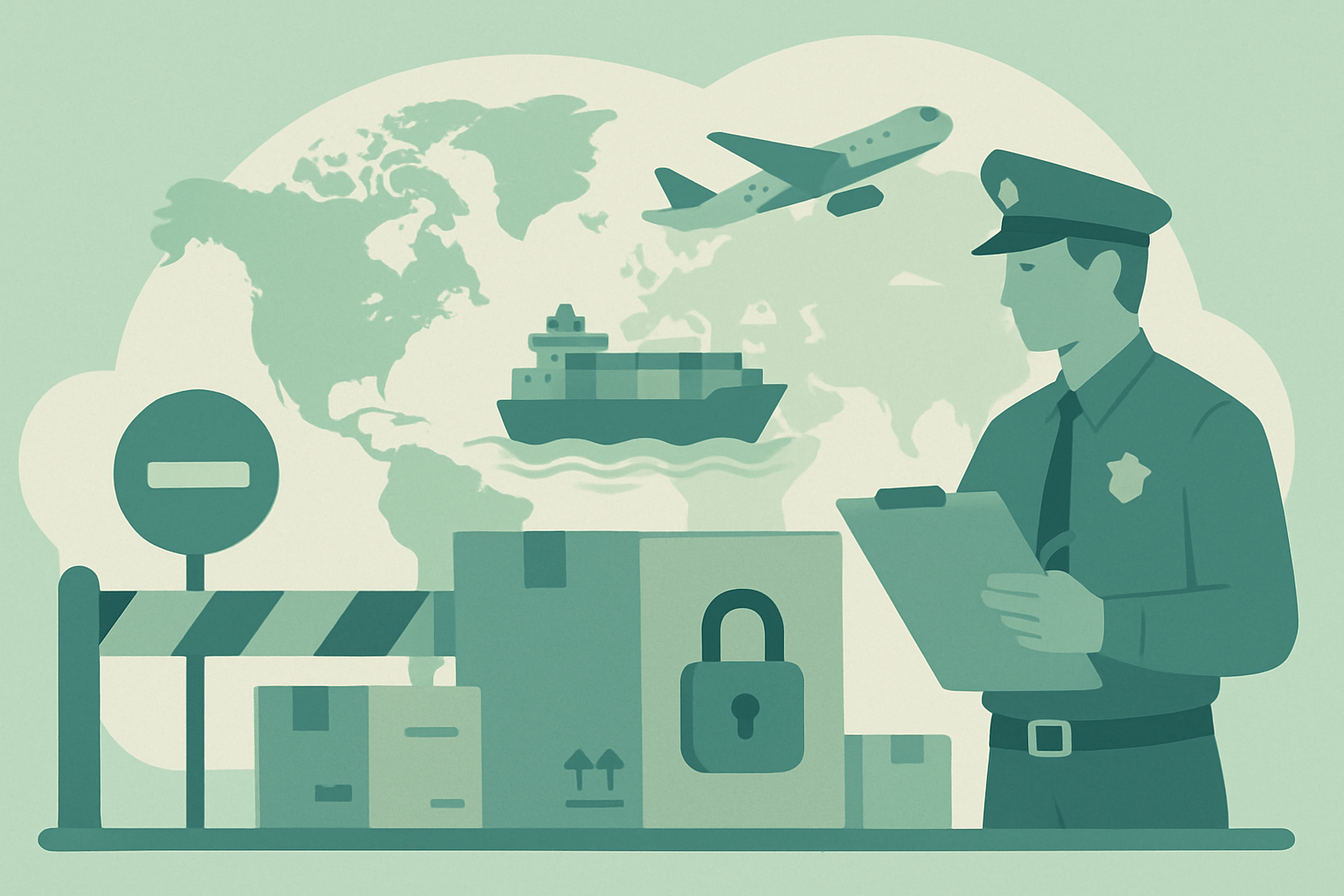
On June 3, 2026, President Trump signed an executive order titled “Strengthening Customs Enforcement,” directing U.S. Customs and Border Protection (CBP) to overhaul how goods — and the companies that import them — are vetted at the US border. Trade attorneys and logistics firms are calling it the most sweeping customs enforcement directive in recent memory.
If you buy from US retailers using a US address, or run a small import resale business, the rules of the road are shifting. Here is what changed and what you should do before the new framework fully takes effect.
What the Executive Order Actually Changes
The order targets a gap regulators have flagged for years: foreign-based companies acting as Importers of Record (IORs) for low-value shipments entering the United States.
Under the previous rules, a foreign logistics company could receive goods in the US on your behalf — as the legal importer on paper — without needing US assets, domestic bonding, or meaningful vetting. That pathway is now closed. Key provisions include:
- Only US-based IORs may file informal entry — the standard method for commercial shipments valued at $2,500 or less
- Foreign IORs seeking to file formal entries must be C-TPAT (Customs-Trade Partnership Against Terrorism) validated, or route everything through a licensed, C-TPAT-validated customs broker
- All IORs face expanded data requirements: beneficial ownership disclosures, domestic asset documentation, anticipated import volumes, and full supply-chain information
- A new minimum penalty floor for customs violations means errors that once drew a warning now carry mandatory fines
CBP has between 45 and 180 days to implement each provision, so the compliance window opens now and runs through late 2026.
Who Gets Hit Hardest
The sharpest impact falls on the model where a foreign seller or foreign logistics company ships goods to a US warehouse using itself as the IOR. This non-resident IOR structure has underpinned much of the low-value cross-border e-commerce flow from Asia. Under the new order, that structure is effectively dismantled.
Small international resellers who relied on foreign-based US agents to receive and consolidate goods on their behalf will need to restructure those arrangements. Businesses that shop directly from US retailers and then forward internationally face less direct exposure — but will still operate in a noticeably more document-intensive environment as the whole ecosystem adjusts.
What This Means for Your Packages
Even if you are not a commercial importer, the enforcement shift ripples through carriers, consolidators, and parcel forwarders. During the 45-to-180-day transition window, expect:
- Longer processing times as intermediaries scramble to verify IOR eligibility
- More frequent requests for proof of purchase, accurate commercial invoice values, and detailed product descriptions
- Greater scrutiny on high-volume or high-frequency shipment patterns
The order also expands CBP’s seizure and disposal authorities for goods tied to noncompliant actors. Packages moving through opaque supply chains or carrying undervalued invoices face higher risk than before.
Documentation Is Now Non-Negotiable
The most actionable step for any international shopper or reseller is to audit what goes on your outbound shipping documents. CBP has consistently targeted vague descriptions and artificially low declared values. Practical steps to take now:
- Always attach an accurate commercial invoice showing what you actually paid the US retailer — not a gift value or an estimate
- Use specific product descriptions: “Men’s cotton T-shirt, size L” rather than “clothing” or “merchandise”
- Do not split a single purchase across multiple packages to stay below duty thresholds in your destination country — customs authorities worldwide share data, and the practice is increasingly flagged
- Keep your purchase receipts; CBP and destination-country customs may request them to verify declared values
Why Your Choice of US Forwarding Partner Now Matters More
One underappreciated implication of the new rules: US-based logistics entities retain rights that foreign-based operators have just lost. The distinction between a US-domiciled forwarding service and a foreign-based consolidator is now written into law, not just common sense.
When you ship through a US package forwarder like Viabox, your purchases are received, consolidated if needed, and dispatched by a company with a permanent US presence, proper domestic bonding, and the compliance standing to operate under these new rules from day one — not one that is scrambling to restructure its IOR arrangements over the next six months.
That means fewer handoffs, a cleaner documentation chain, and a partner that is on the right side of the new framework before CBP’s implementing rules even finalize.
Bottom Line
The June 3 executive order is still being absorbed by the logistics industry, and CBP’s full ruleset will emerge over the coming months. The most resilient position for an international shopper or small reseller right now is clean documentation, accurate invoice values, and a trusted US-based forwarding partner. If you do not yet have a US address, Viabox offers free sign-up with no monthly fees — you pay only when you ship.
Ready to put your US address to work? Log in to your Viabox dashboard to manage shipments and consolidate packages — or create your free US address in minutes.