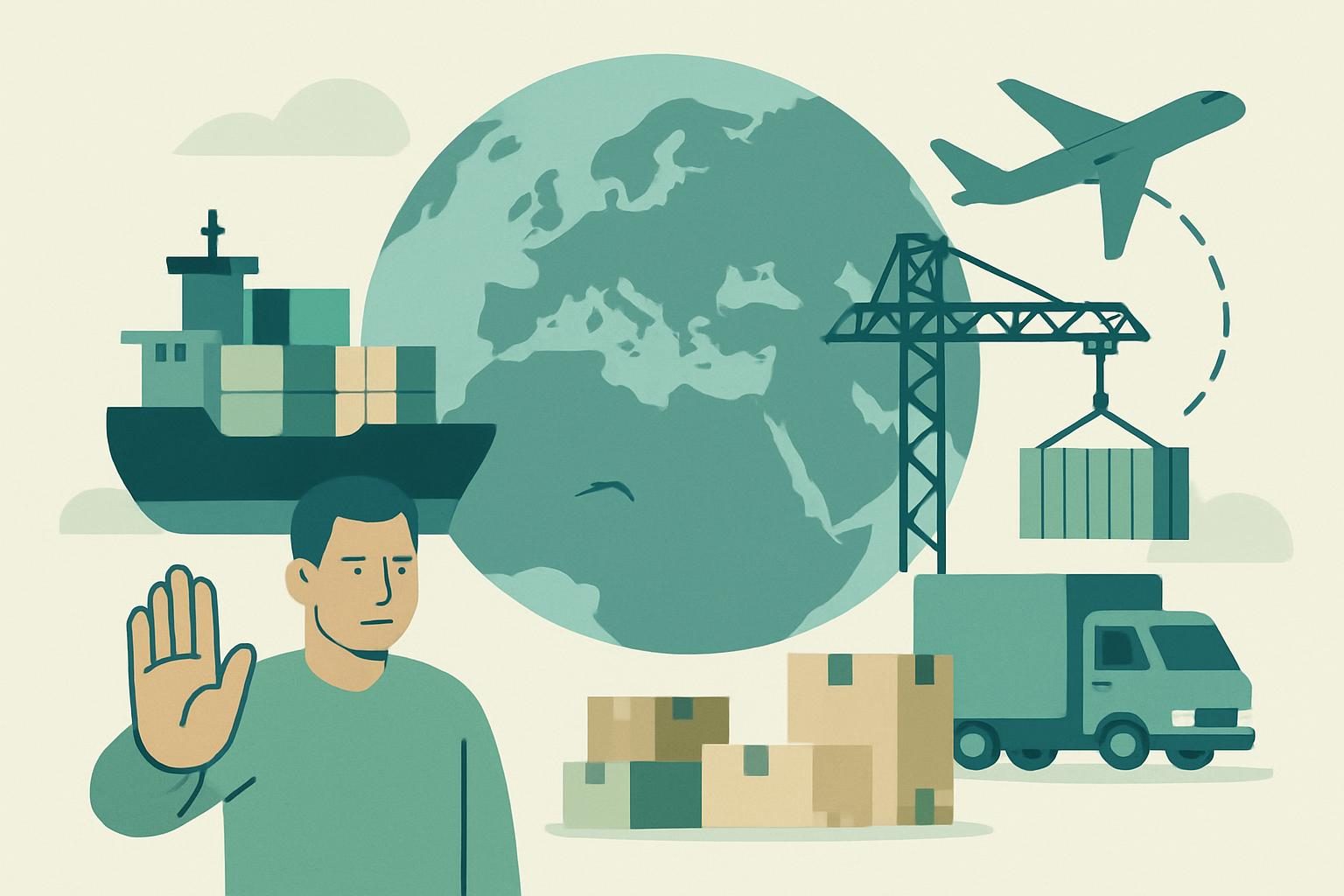
Two separate labor disputes collided at Europe’s busiest ports this week, and the timing could hardly have been worse. From September 2 through 4, a 48-hour warning strike hit six German seaports — Hamburg, Bremerhaven, Wilhelmshaven, Bremen, Brake, and Emden — over a pay dispute between the ver.di union and terminal operators. Almost simultaneously, on September 4, Dutch dockworkers under the FNV Havens union walked out for eight hours at Rotterdam, Amsterdam, and the Zeeland ports in protest of the government’s social security plans. The two strikes weren’t coordinated, but they landed on the same window and hit nearly every major gateway into northern Europe at once.
The unions and terminal operators aren’t far apart on paper — ver.di is asking for an 8.2% raise (or at least €2.50 an hour) under a 12-month deal, while employers have offered 5.1% (about €1.20 an hour) over 18 months — but this was already the second warning strike in the dispute after an earlier 24-hour walkout in August, and neither side has signaled a quick resolution.
Why a Few Hours of Strike Turns Into Days of Delay
Port strikes rarely stay contained to their announced hours. Container terminals don’t simply pause and resume — ships keep arriving on schedule, so vessels queue outside the breakwater while cranes sit idle, and once operations restart, terminals have to work through a backlog before anything moves at normal speed. That backlog then squeezes the rail and inland barge slots that move containers away from the coast, so the disruption spreads well past the ports themselves.
It also arrived at a bad moment. Rotterdam, Hamburg, and Bremerhaven were already sitting near the top of industry congestion rankings, with more than 160,000 TEU reportedly waiting at anchor across the three ports before the strikes even began. Layering a labor stoppage on top of that kind of backlog doesn’t just cause a short delay — it compounds an existing one.
Why This Matters Even If You’ve Never Touched a Container Ship
Most of Viabox’s customers aren’t booking ocean freight — they’re buying from US retailers and having individual packages forwarded abroad. But this kind of disruption still reaches you indirectly. Small resellers who consolidate inventory and ship it home in bulk via ocean freight are the most directly exposed group, since a delayed vessel or a skipped port call can push a shipment back by weeks, not days, right as many businesses start building inventory for the pre-holiday season. Even shoppers who aren’t moving freight by sea can feel secondary effects, since carriers sometimes divert air or express capacity to cover for ocean delays, which tightens capacity and nudges rates upward across the board during peak periods.
This is also a useful reminder of how fragile a single-mode shipping plan can be. A strike, a storm, a canal restriction, or a congested port can each knock out one route on their own — and when a business’s entire supply chain runs through one gateway, any one of those events becomes a real problem.
How to Keep Your Shipments Moving
A few practical habits help limit the exposure:
- If you’re consolidating and shipping in bulk, build in extra lead time around known labor disputes rather than assuming a strike’s stated hours are the full disruption window.
- Ask your freight forwarder directly whether your routing touches Rotterdam, Hamburg, or Bremerhaven, since those are the ports currently carrying the backlog.
- For time-sensitive or lower-volume shipments, air and express courier networks bypass ocean terminals entirely, which matters when a specific seaport is the bottleneck.
- Order and ship earlier than usual heading into peak season — congestion this early in September tends to get worse, not better, as volumes climb toward the holidays.
This is precisely the kind of disruption that individual package forwarding sidesteps by design. When you ship through Viabox, your US address forwards packages by air and courier networks rather than routing through a container port, so a Rotterdam dock strike or a Hamburg wage dispute simply isn’t in the path your package takes. If you’re a shopper or a small reseller who wants a way to keep US purchases moving internationally without betting on any single port staying open, that’s worth having in your back pocket as peak season approaches.
Ready to put your US address to work? Log in to your Viabox dashboard to manage shipments and consolidate packages — or create your free US address in minutes.