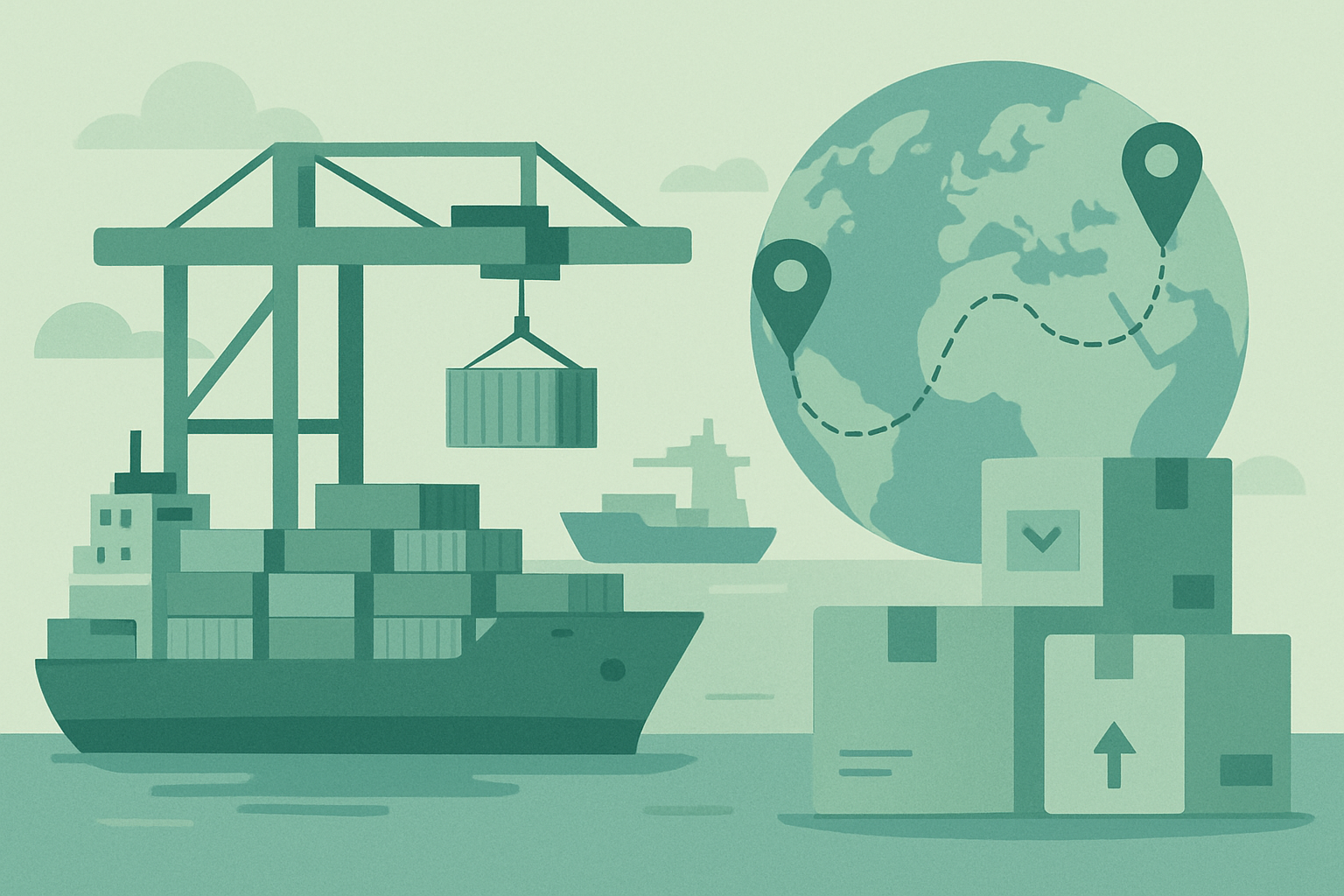
Ports Are the Most Backed Up They’ve Been in Four Years
According to shipping analytics firm Linerlytica, nearly 11% of the world’s container fleet was sitting at anchor waiting for a berth as of June 28, the highest level of global port congestion in four years. The bottleneck is being driven by a mix of severe weather, vessel bunching (too many ships arriving at the same ports at once), and carriers blanking sailings to manage capacity rather than adding more of it.
Where It’s Hitting Hardest
The congestion isn’t spread evenly. North Asia accounts for roughly 38% of the global backlog, with Shanghai reporting delays of up to five days and Taiwan facing both congestion and overbooking. North European ports account for another 13% of the total, and congestion around Rotterdam and other Benelux and German gateways has stretched delays to as much as a week. Southeast Asia, the Mediterranean, and Africa are each sitting around 9% of the global backlog. In India, western ports including Jawaharlal Nehru Port, Kandla, and Mundra have become chokepoints for both imports and exports.
Carriers are responding by trimming capacity rather than racing to clear it. Asia-to-North-Europe routes saw 11 blanked sailings in June, more than the seven originally projected, with further cuts expected in July. On the transpacific, rates to the US East Coast are on track to breach $8,500 per 40-foot container this month.
Why This Matters if You Shop From Outside the US
Most of what fills store shelves outside the US — electronics, apparel, home goods, even parts for locally assembled products — travels by container ship at some point in its journey. When ports back up, everything downstream slows with them: local retailers restock more slowly, selection narrows, and prices often creep up to cover the extra transit time and demurrage costs carriers pass along. If a favorite item has suddenly gone out of stock or gotten pricier at a local retailer in the Gulf, Mexico, or elsewhere, congestion like this is frequently part of the reason, even though it’s invisible from the store shelf.
It’s also a reminder that not all shipping runs through the same choke points. Small parcels moving by air — the kind that leave a US warehouse via USPS, FedEx, UPS, or DHL — aren’t sitting in the same anchorage queues as 40-foot containers. That’s one reason buying directly from US retailers and having the order forwarded internationally has become a more predictable way to get a specific item, rather than waiting on a container that may be stuck outside a jammed port.
Where a Forwarder Fits In
This is the exact gap a package forwarding service like Viabox is built to close. You shop any US store using a real Portland, Oregon address, Viabox receives the package, consolidates multiple orders into one shipment if you want, and sends it onward by air — sidestepping ocean congestion entirely. For resellers who depend on predictable restock timing, or shoppers who just don’t want to gamble on a container sitting at anchor for a week, buying straight from the source in the US and shipping by air keeps the timeline in your own hands instead of a port operator’s.
What to Do If You’re Shopping or Restocking Right Now
- Order earlier than usual for anything time-sensitive — congestion is adding days, not hours, to transit times in the hardest-hit regions.
- Consolidate multiple purchases into a single shipment where possible, since air-forwarded parcels are priced by weight and size, not by container slot.
- Watch for local price increases on goods that typically arrive by sea container, and compare the cost of ordering the same item directly from a US retailer instead.
- If a local supplier’s restock date keeps slipping, check whether the item is available from a US store you could have shipped directly.
Port congestion tends to ease and flare in cycles, but a four-year high is a useful signal: the slowest link in a supply chain sets the pace for everything behind it. For shoppers and small resellers who can’t afford to wait out a jammed port, buying direct from the US and forwarding by air remains one of the more predictable ways around the bottleneck.
Ready to put your US address to work? Log in to your Viabox dashboard to manage shipments and consolidate packages — or create your free US address in minutes.