What FedEx Authenticated Delivery Actually Is
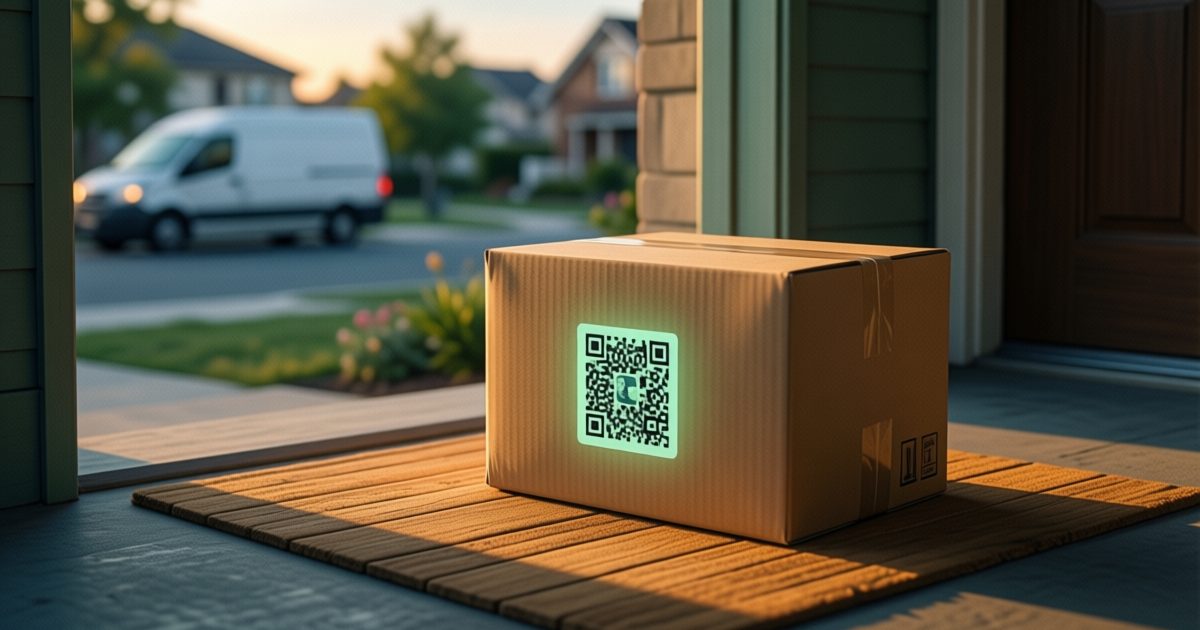
FedEx has rolled out a new service called Authenticated Delivery, which requires the recipient to present a QR code at the door before the driver hands over the package. The service is available on select expedited FedEx offerings — First Overnight, Priority Overnight, Standard Overnight, 2Day, 2Day A.M., and Express Saver — for both residential and commercial addresses in the United States and Canada, and it also applies to international package services (with the exception of FedEx International Ground shipments), according to Supply Chain Dive.
The fee is flat: $20 per package. For a buyer in Riyadh, Mexico City, or Manila who orders a pair of premium headphones or a camera body from a US retailer, that $20 lands on top of whatever shipping and customs costs are already in the budget. It is not optional in the sense that, if the sender opts into the service for a high-value item, the recipient will encounter the QR-code check at the doorstep regardless of where the parcel is being delivered.
Why Carriers Are Pushing This Right Now
Package theft has been a persistent pain point for shippers and carriers. Neil Gibson, FedEx’s SVP of global customer experience, framed the launch around trust rather than speed: “The future of delivery isn’t just moving packages quickly. It’s about building greater trust throughout the delivery process,” as Supply Chain Dive reported. UPS is moving in the same direction; FreightWaves noted that both carriers introduced new security and risk-management features last month, with UPS bundling insurance, address validation, and fraud screening into a product it calls Secure Commerce. The underlying data is stark: Emarketer projects global e-commerce will hit $6.88 trillion this year, and the Merchant Risk Council estimates 3.2 percent of that volume is lost to fraud — a figure that translates to tens of billions of dollars in failed deliveries, chargebacks, and reshipments.
The Restrictions That Trip Up International Shoppers
Here is where the service details matter most for anyone who buys from US stores and has the parcel forwarded overseas. According to FedEx’s service guide, as cited by Supply Chain Dive, Authenticated Delivery shipments carry three notable limitations:
- No address corrections. If the forwarding address or final destination address has a typo, the carrier will not fix it mid-transit.
- No redirect or hold-at-location options. You cannot send the package to a different depot, a neighbor, or a pickup point once it is in the delivery window. (A temporary vacation hold is the only exception.)
- A hard cap of three delivery reattempts. After the third failed attempt, the package is returned to the sender — not held indefinitely at a local facility.
For a domestic US buyer these rules are inconvenient. For an international recipient who may have limited hours at a receiving hub, a customs hold, or a local courier with narrow delivery windows, a three-strike return policy is a real risk. A missed window because of a holiday, a customs inspection delay, or a local courier backlog can mean the entire shipment is sent back across the border.
What to Do Before You Buy
If a US seller offers Authenticated Delivery on a high-value item, ask a few practical questions before checking out. Can you confirm the exact receiving address and contact phone number that will be on the label? Does your local delivery partner have a reliable pickup window that gives the three-reattempt buffer some breathing room? Is the item something you can easily re-purchase if it is returned, or would a loss be genuinely expensive?
For shoppers who consolidate several orders before shipping abroad, a single well-verified address at a US inbound warehouse removes a lot of the uncertainty that a three-reattempt cap creates. Services like Viabox, which give international buyers a stable US address and handle the receiving, quality check, and outbound logistics in one step, take the address-correction risk off the table entirely — the label is correct the first time, and the local delivery is handled by a dedicated hub rather than a door-to-door driver who may try three times and leave.
The Bigger Picture
Carriers are not adding these layers of verification because they enjoy extra friction. They are adding them because the economics of a lost or stolen parcel — the reshipment cost, the chargeback, the customer who never comes back — are now a board-level concern. UPS reported insuring 62 million packages last year and paying out $132 million in claims, with 97 percent of claims processed within five days, according to FreightWaves. That volume of at-risk value is exactly why a $20 QR-code gate feels trivial to a carrier and exactly why it matters to the person standing on the other side of the door.
None of this means international shopping is getting harder. It means the logistics chain between a US checkout page and your front door is becoming more formalized, more verified, and more sensitive to small errors. The buyers who plan their addresses, their delivery windows, and their consolidation strategy ahead of time will feel almost no difference. The ones who do not will be the ones staring at a “returned to sender” notification on their phone. Knowing the rules before the parcel leaves the warehouse is the cheapest insurance you will buy all year.
Ready to put your US address to work? Log in to your Viabox dashboard to manage shipments and consolidate packages — or create your free US address in minutes.