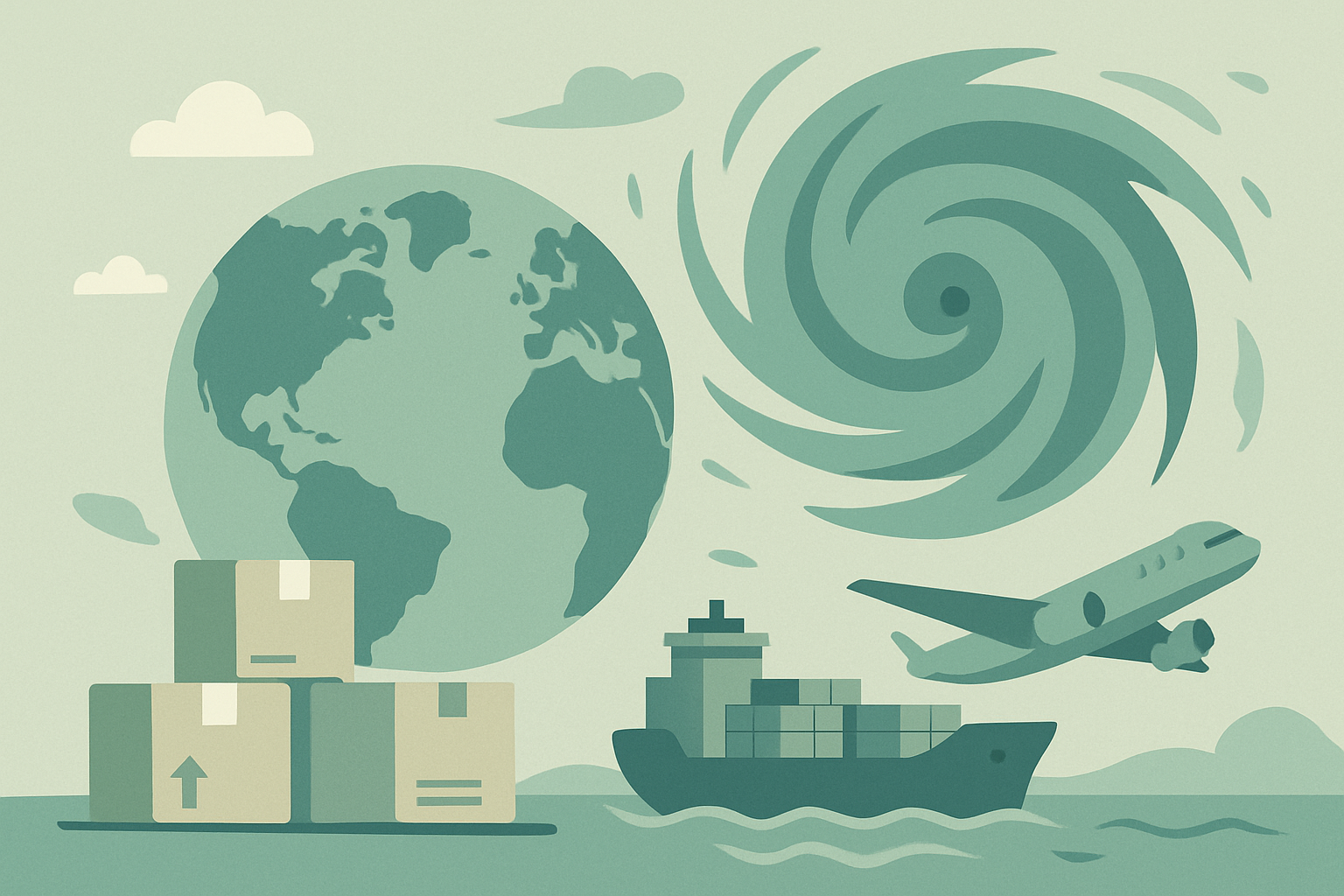
The 2026 Atlantic hurricane season officially opened on June 1, and NOAA released its pre-season outlook alongside it: eight to fourteen named storms expected this year, with three to six reaching hurricane strength and one to three becoming major hurricanes (Category 3 or higher). The agency puts a 55% probability on a below-normal season, driven largely by an El Niño pattern expected to strengthen through summer — a climate signal that historically suppresses Atlantic storm formation.
That sounds reassuring. But logistics professionals know that even a quiet season only takes one storm in the right place to disrupt weeks of shipments. If you shop US stores and forward packages to the Caribbean, Mexico, or Latin America, here is what you need to know before the peak window arrives.
Why Hurricane Season Matters to Cross-Border Shoppers
The Atlantic hurricane zone covers more geography than most people picture. Storms threaten not just Florida and the Carolinas — they also target Gulf Coast ports including Houston and New Orleans, Caribbean transshipment hubs in Jamaica and the Dominican Republic, and Mexico’s eastern coastline. If your packages are being forwarded to the Caribbean, Central America, or any Gulf-side Mexican city, those routes run directly through the areas hurricane season targets.
The disruption compounds quickly. When a port authority issues a closure order ahead of a storm, vessels in port are ordered offshore and incoming ships divert to anchorage. After the storm passes — even a Category 1 — a multi-vessel queue forms. Port analysts consistently see cargo delayed three to seven days beyond the reopening date, stacked on top of whatever transit time had already accumulated. Ocean carriers may issue omitted-call notices, skipping the affected port entirely on that sailing. Air freight is more flexible, but hub airports in the Caribbean and Gulf region experience ground stops during storms, and available capacity shrinks as carriers redirect aircraft toward relief logistics.
When the Risk Is Highest
The season runs June 1 through November 30, but the statistical peak sits firmly between mid-August and mid-October. If you are planning major US purchases — back-to-school electronics, fall fashion for personal use or resale, seasonal inventory for your import business — that peak window lands right in your buying calendar. Building extra lead time into your shipping plan now costs nothing. Paying premium express rates to recover from a weather delay in September costs considerably more.
Practical Steps to Protect Your Shipments
- Consolidate before shipping. Holding several packages and combining them into one shipment means fewer parcels in transit at any given time and fewer chances of something getting stranded mid-journey during a weather event. Consolidation also reduces your total shipping cost per item.
- Order earlier from August through October. If you are buying for a resale deadline or a seasonal occasion, place US orders four to six weeks ahead of your normal lead time during the peak storm months.
- Check destination port advisories before booking sea freight. Carriers and freight forwarders post real-time alerts. A 48-to-72-hour closure at a Caribbean transshipment hub can cascade into delays that stretch well beyond the port’s reopening date.
- Consider air freight for time-sensitive items. During peak storm months, the premium for express air often beats the cost of a week-long delay at a disrupted port — especially for resellers managing tight inventory turnover.
Where Your Packages Wait Makes a Difference
When you use a US parcel-forwarding service, the location of the warehouse matters more than most shoppers consider. A facility on the Gulf Coast or East Coast sits inside the hurricane corridor. Packages waiting there to be consolidated or forwarded can be directly affected by storm preparations, facility closures, or carrier service suspensions.
Viabox stores packages at its warehouse in Portland, Oregon — on the Pacific Northwest coast, entirely outside the Atlantic hurricane zone. Goods that arrive at your Viabox address are held safely until you decide to ship them, with no exposure to Gulf storms or East Coast weather events while they wait. When you are ready, you choose the carrier and service level, and the shipment goes out.
The Bottom Line
NOAA’s below-normal forecast for 2026 is encouraging, but it does not eliminate risk along the Caribbean and Gulf shipping lanes that serve millions of international shoppers. A single well-placed storm between August and October is all it takes to compress delivery windows by a week or more. If you depend on US packages arriving on schedule — for personal use or for resale — now is the time to consolidate shipments, pad your timeline for peak-season orders, and make sure your packages are sitting somewhere safe while they wait. The season is six months long. A few adjustments at the start pay off all the way to November.