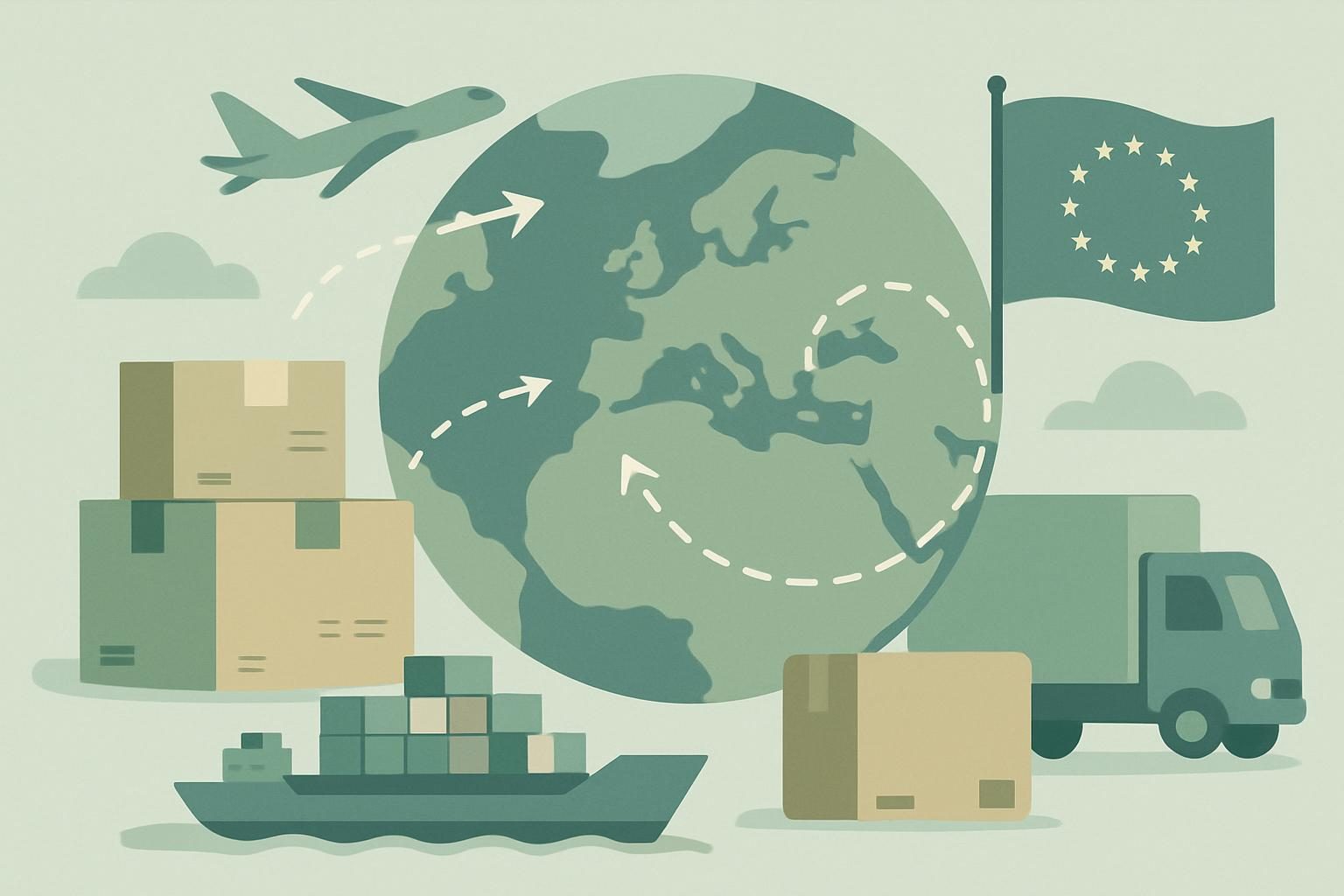
On August 12, 2026, the European Union’s Packaging and Packaging Waste Regulation (PPWR) officially came into force. It’s one of the biggest shifts in how packaged goods are allowed to cross into the EU in years, and it applies no matter where the box is coming from — a US retailer, a small dropshipper, or an independent seller on Amazon or Zalando all fall under the same rules the moment a package lands in an EU mailbox.
What just changed
PPWR sets new limits on how much of a parcel can be empty space. Padding materials like air pillows, bubble wrap, and foam don’t count as “product” under the rule, so a box that’s half packing material is treated as half-empty — and sales packaging placed on the EU market from August 12 onward is expected to keep that empty space to a minimum unless it’s technically unavoidable. Sellers also now need a declaration of conformity and supporting documentation proving their packaging meets the new sustainability requirements, and any business without its own EU entity has to appoint an authorized representative inside the bloc. Marketplaces such as Amazon and Zalando are required to verify a seller’s packaging registration before allowing a listing to go live at all.
Why it matters even if you’re not a “seller”
PPWR was written with brands and marketplaces in mind, but its effects reach further than the companies technically on the hook. Customs authorities can inspect packaging both at the border and after goods are already in the country, and non-compliant shipments risk being detained, denied entry, or pulled from the market. Member states have until February 2027 to finalize exact fines, but the enforcement mechanism — checks at the border, marketplace gatekeeping, documentation requests — is live now. That means more scrutiny on parcels entering the EU in general, arriving right as the bloc is also phasing out duty-free treatment for low-value shipments under €150. A few smaller sellers have reportedly already scaled back EU shipping rather than deal with the new registration overhead.
If you’re buying from US stores and forwarding purchases to Europe, or building EU-bound orders as a small reseller, the practical effect is the same either way: parcels crossing into the EU right now are moving through a system with more paperwork checkpoints and more reasons for a customs officer to take a second look at a box.
What actually helps
None of this makes shipping to Europe impractical, but it does reward being deliberate about how packages are built and documented. A few things matter more than they did a month ago:
- Fewer, denser parcels. Consolidating several purchases into one properly packed shipment means fewer individual boxes moving through EU customs, each with less wasted space than a stack of separately padded packages would have.
- Documentation that matches contents. Commercial invoices and customs declarations that accurately describe what’s inside reduce the odds of a shipment getting flagged for a closer look.
- Using a forwarder that already handles this. This is exactly the kind of regulatory shift a US package consolidator like Viabox exists to absorb — combining multiple orders into one well-packed shipment and preparing paperwork correctly before it ever leaves the warehouse, rather than leaving a shopper to sort out EU packaging compliance from another continent.
The bigger pattern
PPWR is one more entry in a growing list of 2026 changes tightening how goods move across borders, alongside the EU’s rollback of its €150 duty-free threshold and similar de minimis reforms elsewhere. None of it is a reason to stop buying from US stores — it’s a reason to be a bit more thoughtful about how those purchases get bundled and shipped. If you’re regularly sending packages to Europe, now’s a reasonable time to make sure your shipments are consolidated and properly declared instead of trickling in one box at a time.
Ready to put your US address to work? Log in to your Viabox dashboard to manage shipments and consolidate packages — or create your free US address in minutes.