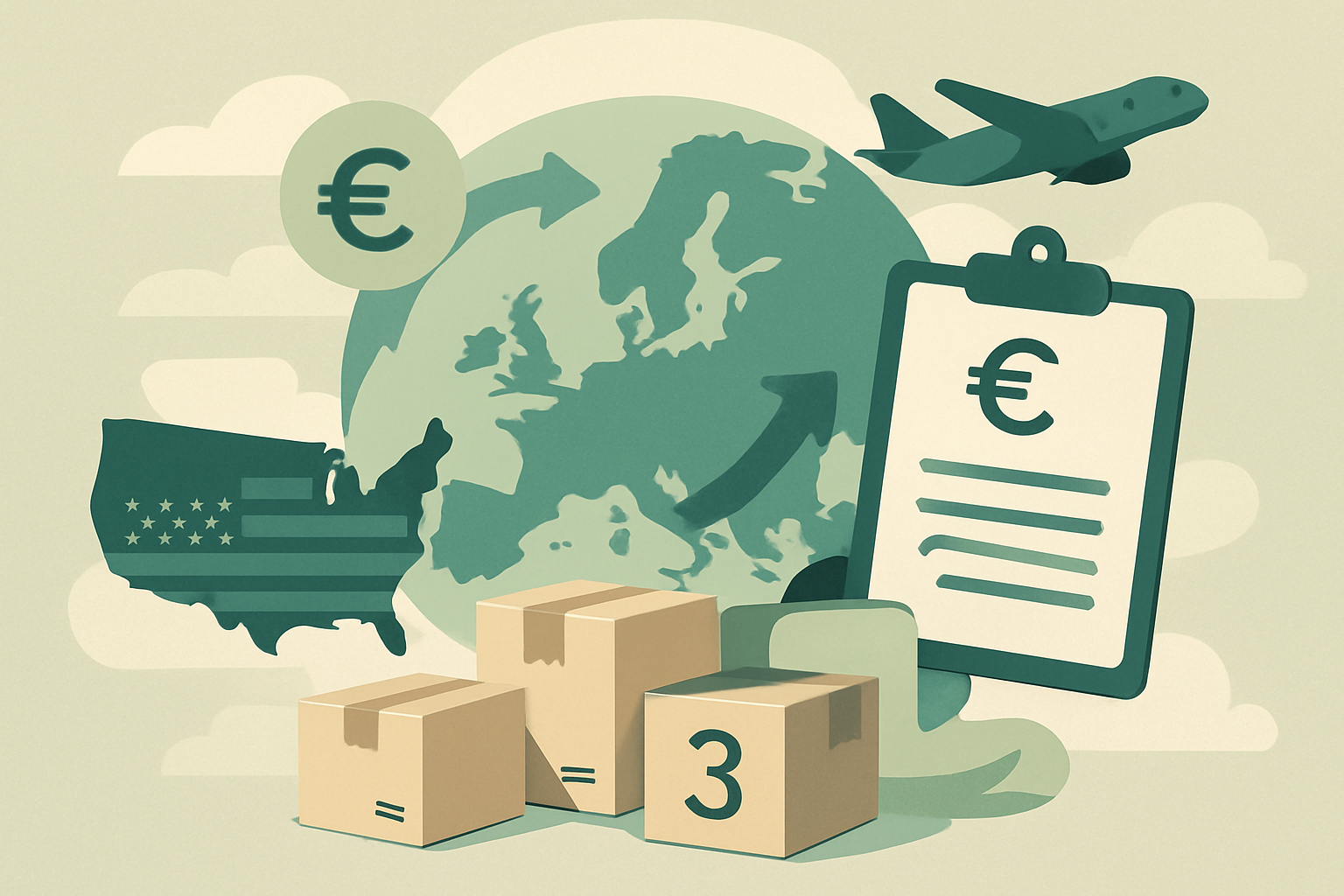
On July 1, 2026, the European Union scrapped one of the oldest rules in cross-border e-commerce: the €150 duty-free threshold on parcels arriving from outside the bloc. In its place is a flat €3 customs duty, charged per product category inside a parcel, and three weeks in, it’s already reshaping how packages move into Europe.
What Actually Changed
Until July 1, any parcel valued under €150 could enter EU countries without paying customs duty (VAT still applied separately). That exemption is gone. Under the new interim rule, which the European Commission says will stay in place until standard tariffs return in July 2028, every parcel arriving from a non-EU country now owes a flat €3 duty for each distinct tariff category of goods inside it, regardless of the parcel’s total value.
The scale of what’s affected is enormous: an estimated 4.6 billion parcels under €150 entered the EU in 2024, roughly 12 million a day, and the vast majority of those are exactly the kind of low-value shipment this rule now targets.
How the €3 Charge Is Actually Calculated
The mechanic catches a lot of people off guard: the €3 is charged per tariff-heading category, not per parcel. A box containing a dress, a pair of sunglasses, and a phone case, three different customs categories, owes €9 in duty before VAT, even though it’s one shipment. A box with five identical t-shirts in different colors, by contrast, is still one category and one €3 charge. The duty is typically collected by the courier or postal operator at the point of delivery, on top of any VAT already due, so it usually shows up as a small extra charge at your door rather than something you pay upfront when you order.
Why Carriers Are Already Straining
The major carriers saw this coming and warned against it. DHL, FedEx, and UPS jointly told EU finance ministers before the July 1 start date that the new paperwork and per-item classification requirements weren’t ready for the volume involved, and predicted bottlenecks at major hubs. Three weeks in, that’s showing up in the data: direct freighter capacity flying into Europe from Asia-Pacific and the Middle East has fallen for three straight weeks, down 16% compared with the week before the rule took effect.
- Budapest: air freighter capacity down 51%
- Milan Malpensa: down 23%
- Luxembourg: down 23%
- Amsterdam: down 21%
- Paris Charles de Gaulle: up 14%, the one exception
Paris’s growth likely traces back to France suspending its own competing €2-per-line national parcel fee, introduced back in March, so it wouldn’t stack a second charge on top of the new EU-wide one.
What This Means for Your Next US Order
If you’re shopping US stores and shipping to Europe, this is now a real line item to plan for, not a one-time hiccup. A single item from a single US retailer, shipped straight to your door, will typically owe €3 in duty if it’s under €150, plus VAT, which already applied. Costs add up faster when purchases arrive as separate parcels from different categories of goods on different days, since each shipment triggers not just its own duty calculation, but often its own courier handling and customs-processing fee on top of that.
This is exactly the kind of cost consolidation was built to soften. When you route multiple US purchases through a single US address, which is the core of what Viabox does, they get combined into one outbound shipment before crossing into your country. You’ll still owe duty on the distinct categories of goods inside the box, but you’re paying one courier’s processing and handling costs instead of several, with one tracking number and one delivery event instead of a scattered week of doorstep charges.
The broader lesson from the first three weeks of this rule is that Europe’s customs environment for small parcels is genuinely tightening, and the carriers struggling most are the ones moving single, unconsolidated items through congested air-freight lanes. Planning your US shopping around fewer, larger, consolidated shipments isn’t just a shipping-cost decision anymore. It’s now a customs one too.
Ready to put your US address to work? Log in to your Viabox dashboard to manage shipments and consolidate packages — or create your free US address in minutes.