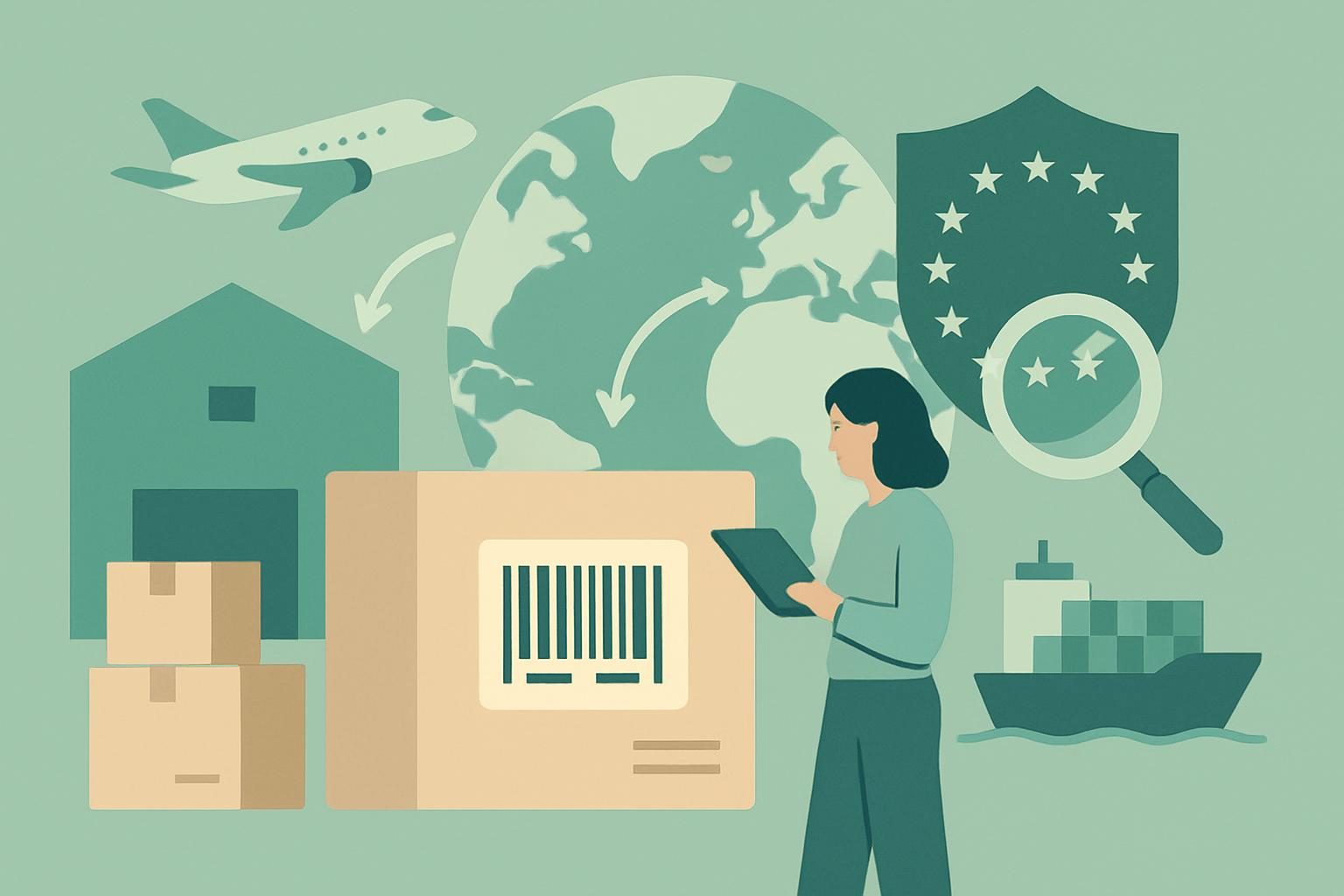
A New EU Customs Rule Lands on November 1
The EU has spent most of 2026 rebuilding how it handles incoming parcels. Pre-arrival security data (ICS2) became mandatory for all shipments on June 1. The old €150 duty-free threshold disappeared on July 1, replaced by a temporary €3 flat charge per line item on the customs declaration. Now comes the next piece: starting November 1, 2026, every business-to-consumer parcel entering the EU — regardless of its value — must carry a proper product identifier on each declaration line, or risk getting stuck at the border.
What a “Product Identifier” Actually Means
This isn’t a new duty or fee — it’s a data requirement, and it’s stricter than what most shippers are used to providing. Under the new rule, a customs declaration should include up to three identifiers for each line item:
- A Merchant Product Identifier — the seller’s own SKU, listing ID, or internal product code
- A Manufacturer Product Identifier — the code assigned by the maker or supplier of the item
- A standardised identifier such as a GTIN, EAN, or UPC barcode, where one exists
Vague labels like “clothing,” “electronics,” or “gift” — long accepted on customs forms — will no longer cut it. EU customs authorities have said they can reject, hold, or flag for further inspection any declaration missing this level of detail. Voluntary submission has been allowed since July 1, but from November 1 it becomes mandatory for B2C shipments. Business-to-business parcels going to a VAT-registered company are exempt.
Why This Matters If You Shop US Stores and Ship to Europe
If you’re in the EU and use a US address to buy from American retailers, this change touches nearly everything you order. It doesn’t matter if the item costs $12 or $1,200 — the identifier requirement applies to any value now, not just the low-value packages that used to fall under the de minimis exemption. That’s a shift from earlier 2026 changes, which mostly targeted cheap parcels from marketplace sellers. This one applies broadly, right as the run-up to the holiday shopping season begins, when parcel volumes into Europe spike and customs backlogs are already more likely.
The practical risk is a held shipment: a package sitting in a customs facility because the declaration only said “shoes” instead of naming the brand, model, and a manufacturer or barcode reference. Multiply that across a consolidated box with several different purchases, and one vague line item can slow down the whole shipment.
How to Get Ahead of It
The fix is mostly about paperwork you already have sitting in your inbox:
- Keep the original order confirmation or receipt from the US store — it usually lists the item name, model number, or SKU
- For electronics, appliances, or branded goods, note the manufacturer’s model number if it’s not obvious from the listing
- Avoid generic descriptions when you can — “Nike Air Zoom Pegasus 41, size 9” clears customs far more smoothly than “shoes”
At Viabox, we already ask for an item description and declared value on every package before it ships internationally, since accurate customs paperwork is what keeps a forwarded shipment moving instead of sitting in a warehouse overseas. We’re updating our EU shipping process now so packages booked under our account carry the product detail this rule requires, but the more specific the information you give us up front, the faster your box clears customs on the other end.
If you’re planning any US purchases to ship to Europe this fall, it’s worth sorting out your receipts before November 1 rather than after a package gets stuck. Whether you’re shipping with Viabox or another provider, ask now how they intend to handle the new requirement — it’s a much easier conversation to have before your holiday orders are in transit.
Ready to put your US address to work? Log in to your Viabox dashboard to manage shipments and consolidate packages — or create your free US address in minutes.