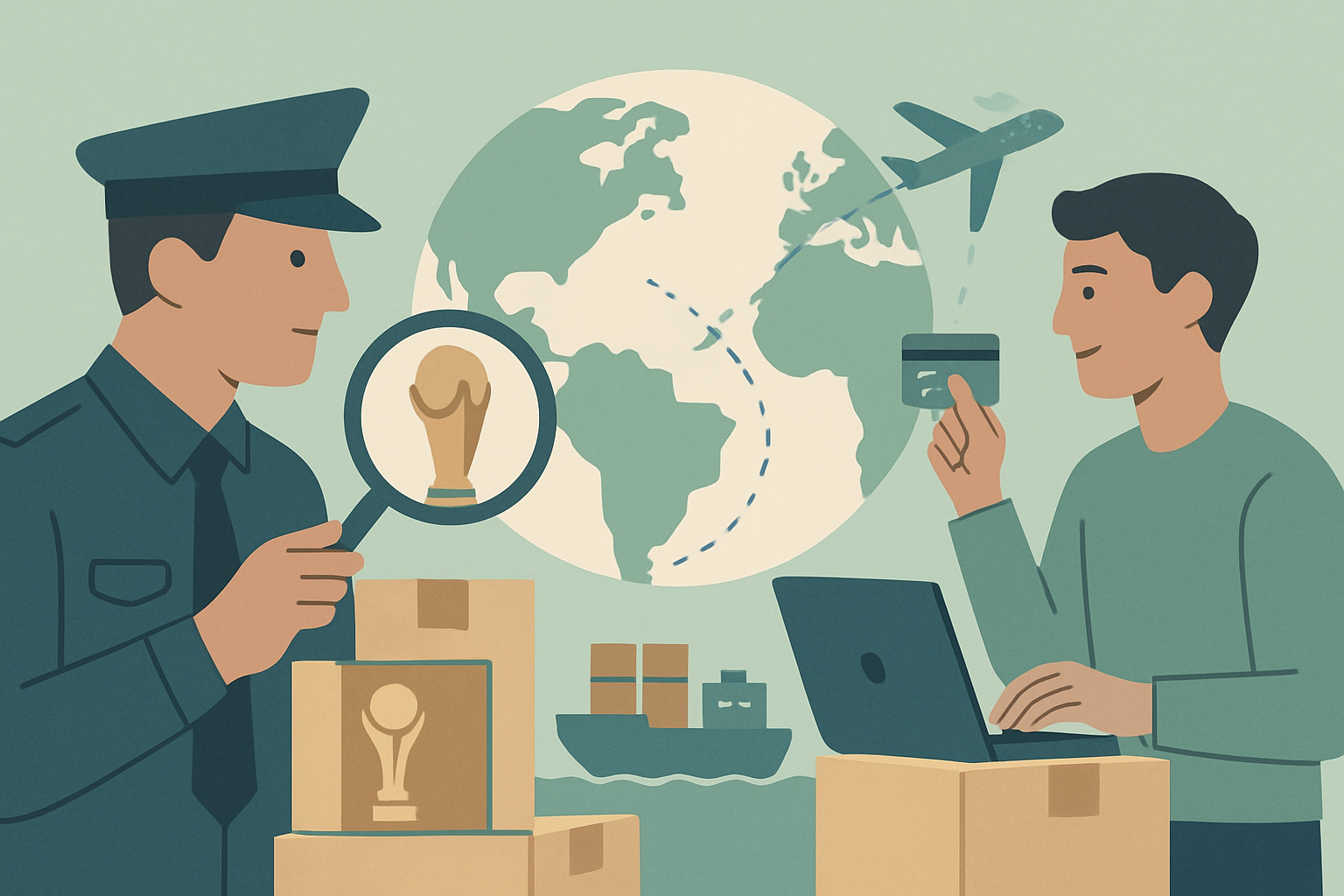
While the world’s attention has been on the pitch, U.S. Customs and Border Protection has been running one of its biggest counterfeit crackdowns in years. Since the FIFA World Cup 2026 kicked off, CBP has logged more than 1,400 seizures of fake tournament merchandise with a combined manufacturer’s suggested retail value north of $23 million — and the busts have kept coming through late June and into July.
A Wave of Seizures at Ports Across the Country
The scale is striking. CBP officers at the Houston seaport intercepted roughly 12,000 fake Adidas jerseys, 4,500 counterfeit Adidas soccer balls, nearly 4,400 pairs of fake athletic shoes, and dozens of packages of counterfeit Apple-branded watches and earbuds carrying unauthorized FIFA logos — a haul valued at more than $6 million. In Miami, officers seized over 16,000 counterfeit Nike jerseys tied to an earlier interdiction of nearly 7,900 more. Cincinnati’s “Protect the Pitch” operation and Indianapolis’s “Operation Winner’s Circle” each intercepted dozens of shipments of fake jerseys, shorts, hats, and jewelry in just a few days of targeted enforcement. Investigators say most of the counterfeit goods originated in Hong Kong and mainland China, with some shipments routed through Mexico and Colombia.
Why Fake Gear Keeps Reaching Shoppers Outside the US
These seizures only capture what customs officers catch — plenty of counterfeit product still slips through and ends up on marketplaces and street vendors far from any US port. That’s especially true for shoppers outside the United States, who often can’t buy directly from Nike, Adidas, Fanatics, or the official FIFA store because those retailers either don’t ship internationally or quote shipping and duty costs that make the purchase pointless. Local resellers step into that gap, and not all of them are sourcing from legitimate channels. A jersey or watch that looks identical in a marketplace photo can turn out to be one of the exact items CBP has been pulling off the shelves.
For anyone buying official team gear, collectibles, or electronics tied to the tournament, that’s a real risk: paying full price for a product that isn’t authentic, has no warranty, and may not even be safe (counterfeit electronics in particular are a common source of overheating and battery issues).
The Safer Path: Buy From the Source, Ship It Yourself
The most reliable way to guarantee you’re getting the genuine article is to buy directly from the authorized US retailer — Nike.com, Fanatics, NFL Shop, the official FIFA store — and have it forwarded from there. That’s the exact gap a package forwarding service like Viabox is built for: shoppers get a real US address, checkout normally on the official retailer’s US site at US prices, and Viabox receives the package and ships it on to wherever they actually are, whether that’s the Gulf, Mexico, Latin America, or Europe. No guessing about a marketplace seller’s supply chain, no counterfeit risk, no markup from a middleman reseller — just the same product US customers are buying, sent to your door.
Worth Doing Right
With the tournament’s knockout rounds drawing huge demand for official gear, counterfeiters are leaning in hard, and CBP’s numbers this month make clear how much fake product is actually moving. Buying from the authorized source and forwarding it yourself costs a little more attention up front, but it’s the difference between owning a genuine piece of this World Cup and owning one of the 23 million dollars’ worth of fakes that didn’t quite make it past the border. If you shop US retailers regularly, a US forwarding address is worth setting up now — it pays off well beyond this tournament.
Ready to put your US address to work? Log in to your Viabox dashboard to manage shipments and consolidate packages — or create your free US address in minutes.