VIABOX Newsletter

  • Panama Canal Congestion Hits Record Highs: What Shippers Should Know

    Panama Canal Congestion Hits Record Highs: What Shippers Should Know

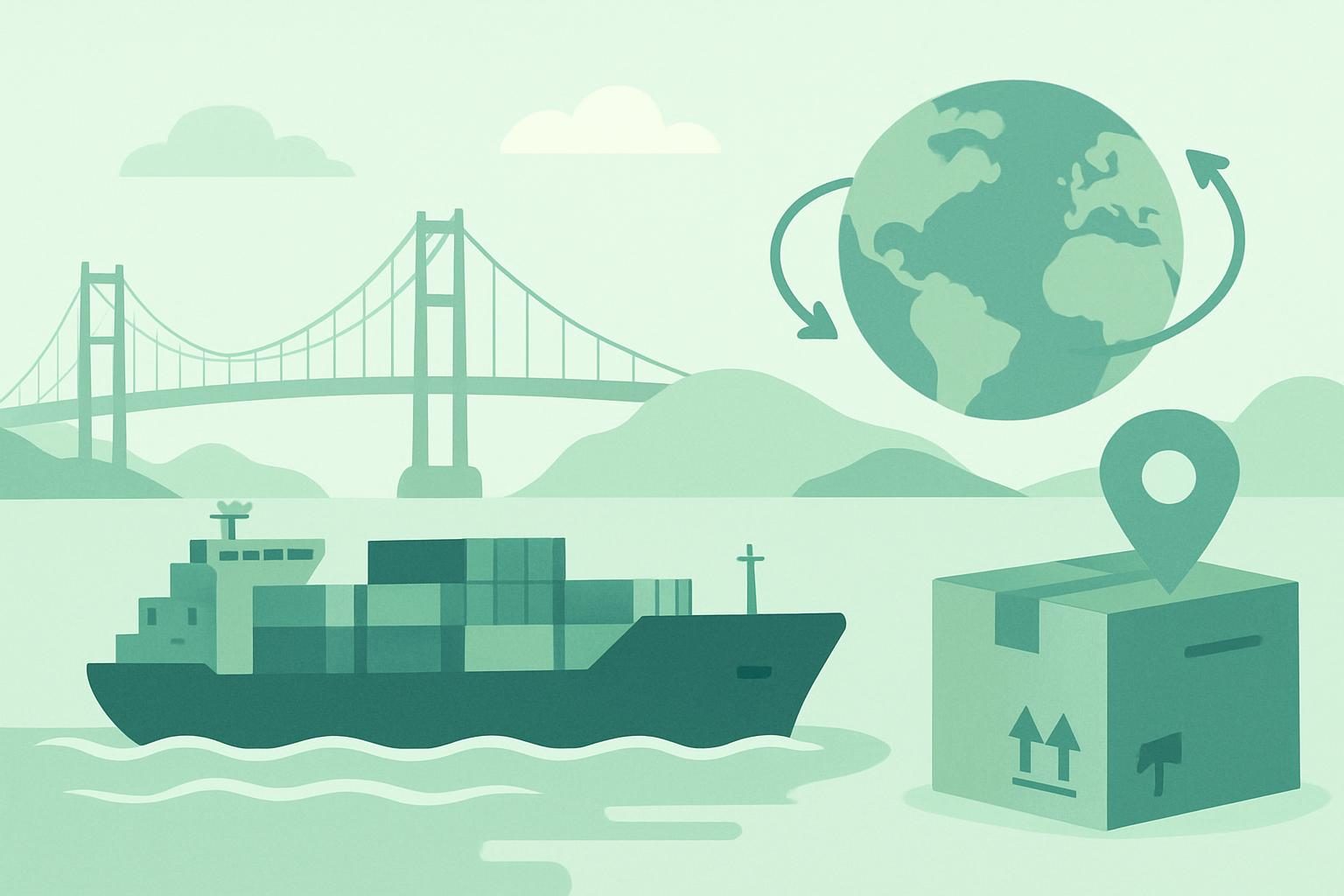
    A Record $4 Million Toll to Skip the Line

    This week, the container ship Seaspan Benefactor paid roughly $4 million through the Panama Canal Authority’s booking auction just to jump ahead of the queue of vessels waiting to cross — more than double the average price shippers had been paying over the previous seven days. The Canal Authority has acknowledged that some auction slots are now clearing above $1 million, a price line-skippers are apparently willing to pay rather than wait their turn.

    And the wait is real: ships without a pre-booked transit slot are facing roughly 10 days in line for Pacific-to-Atlantic passage, the longest backup since May, according to shipping data cited by Argus Media.

    Why the Canal Is Backed Up Again

    Three problems are colliding at once:

    • Rerouted Gulf traffic: the ongoing conflict involving Iran has pushed many vessels to avoid the Strait of Hormuz and the Bab el-Mandeb strait near Yemen, sending oil, gas, fertilizer, and chemical cargo toward the Panama route instead.
    • Lower water levels: a weaker-than-expected rainy season tied to El Niño has forced the Canal Authority to keep draft restrictions tighter than normal in the Neopanamax locks, which slows throughput.
    • Scheduled maintenance: lock outages are expected to run through September, further shrinking the number of usable transit slots at exactly the wrong time.

    Put together, that’s a chokepoint problem stacked on a weather problem stacked on a maintenance problem — which is why shippers are paying record sums just to keep cargo moving on schedule.

    What This Actually Means If You Buy or Resell From the US

    It’s worth being precise about who this hits hardest. The vessels paying these queue-jump fees are carrying full containers — bulk inventory, industrial cargo, energy products — not individual parcels. If you’re a reseller who imports pallets or full containers of goods through Latin American or Gulf ports, this congestion is a direct cost and a direct delay: restock timelines just got less predictable, and landed costs just picked up a new, volatile line item.

    If you’re buying finished goods from US retailers and shipping them out individually or in small consolidated boxes, the exposure is smaller but not zero. US retailers that restock through ocean freight — especially on Asia-to-US lanes that also lean on Panama transits — can see their own inventory delayed, which shows up as backorders and price bumps at checkout. Congestion at one major chokepoint tends to ripple through freight capacity and fuel surcharges more broadly, even on routes that never touch the canal.

    For Gulf-based resellers specifically, there’s a second layer worth watching: the same conflict pushing traffic away from Hormuz and Bab el-Mandeb toward Panama is also disrupting shipping lanes closer to home, so sourcing through Gulf ports right now means dealing with volatility from two directions at once.

    The Advantage of Buying Small and Shipping Fast

    This is exactly the environment where sourcing individual items directly from US retailers, rather than betting on a slow-moving container of bulk inventory, starts to look like the more resilient strategy. A US shipping address lets you buy from Amazon, Walmart, Target, or niche US brands the moment stock is available, hold items at a US warehouse to consolidate multiple orders into one shipment, and send everything out via carriers that never touch a canal queue. That’s the model services like Viabox run on — no monthly fees, a real US address, and you only pay when you actually ship. It won’t replace container shipping for anyone running true bulk import volume, but for a reseller stocking a storefront in smaller batches, it sidesteps this entire category of ocean-freight risk.

    Bottom Line

    Ocean freight is having a genuinely rough stretch right now — a war rerouting tankers, a weak rainy season, and scheduled maintenance are all landing on the Panama Canal at the same time, and shippers are paying millions of dollars just to avoid the resulting queue. If your business depends on predictable restock timing, it’s worth diversifying away from any single chokepoint. If that sounds like your situation, a free Viabox US address is worth setting up before your next order — so you’re shipping on your own schedule, not the canal’s.

    Ready to put your US address to work? Log in to your Viabox dashboard to manage shipments and consolidate packages — or create your free US address in minutes.
    Go to my Viabox dashboard →

  • The EU’s New Packaging Law Just Took Effect. Here’s What Changes

    The EU’s New Packaging Law Just Took Effect. Here’s What Changes

    On August 12, 2026, the European Union’s Packaging and Packaging Waste Regulation (PPWR) officially came into force. It’s one of the biggest shifts in how packaged goods are allowed to cross into the EU in years, and it applies no matter where the box is coming from — a US retailer, a small dropshipper, or an independent seller on Amazon or Zalando all fall under the same rules the moment a package lands in an EU mailbox.

    What just changed

    PPWR sets new limits on how much of a parcel can be empty space. Padding materials like air pillows, bubble wrap, and foam don’t count as “product” under the rule, so a box that’s half packing material is treated as half-empty — and sales packaging placed on the EU market from August 12 onward is expected to keep that empty space to a minimum unless it’s technically unavoidable. Sellers also now need a declaration of conformity and supporting documentation proving their packaging meets the new sustainability requirements, and any business without its own EU entity has to appoint an authorized representative inside the bloc. Marketplaces such as Amazon and Zalando are required to verify a seller’s packaging registration before allowing a listing to go live at all.

    Why it matters even if you’re not a “seller”

    PPWR was written with brands and marketplaces in mind, but its effects reach further than the companies technically on the hook. Customs authorities can inspect packaging both at the border and after goods are already in the country, and non-compliant shipments risk being detained, denied entry, or pulled from the market. Member states have until February 2027 to finalize exact fines, but the enforcement mechanism — checks at the border, marketplace gatekeeping, documentation requests — is live now. That means more scrutiny on parcels entering the EU in general, arriving right as the bloc is also phasing out duty-free treatment for low-value shipments under €150. A few smaller sellers have reportedly already scaled back EU shipping rather than deal with the new registration overhead.

    If you’re buying from US stores and forwarding purchases to Europe, or building EU-bound orders as a small reseller, the practical effect is the same either way: parcels crossing into the EU right now are moving through a system with more paperwork checkpoints and more reasons for a customs officer to take a second look at a box.

    What actually helps

    None of this makes shipping to Europe impractical, but it does reward being deliberate about how packages are built and documented. A few things matter more than they did a month ago:

    • Fewer, denser parcels. Consolidating several purchases into one properly packed shipment means fewer individual boxes moving through EU customs, each with less wasted space than a stack of separately padded packages would have.
    • Documentation that matches contents. Commercial invoices and customs declarations that accurately describe what’s inside reduce the odds of a shipment getting flagged for a closer look.
    • Using a forwarder that already handles this. This is exactly the kind of regulatory shift a US package consolidator like Viabox exists to absorb — combining multiple orders into one well-packed shipment and preparing paperwork correctly before it ever leaves the warehouse, rather than leaving a shopper to sort out EU packaging compliance from another continent.

    The bigger pattern

    PPWR is one more entry in a growing list of 2026 changes tightening how goods move across borders, alongside the EU’s rollback of its €150 duty-free threshold and similar de minimis reforms elsewhere. None of it is a reason to stop buying from US stores — it’s a reason to be a bit more thoughtful about how those purchases get bundled and shipped. If you’re regularly sending packages to Europe, now’s a reasonable time to make sure your shipments are consolidated and properly declared instead of trickling in one box at a time.

    Ready to put your US address to work? Log in to your Viabox dashboard to manage shipments and consolidate packages — or create your free US address in minutes.
    Go to my Viabox dashboard →

  • FedEx’s 2026 Holiday Surcharges Are Up 23%: Ship Before Sept. 28

    FedEx’s 2026 Holiday Surcharges Are Up 23%: Ship Before Sept. 28

    FedEx has confirmed its 2026 holiday peak season surcharges, and the numbers are higher than last year across nearly every service level — including the international and ground services that cross-border shoppers and package forwarders rely on. The surcharge window runs from September 28, 2026 through January 17, 2027. If you’re planning to stock up on US goods before the holidays, the cost of shipping them home is about to change, and it’s worth knowing the new numbers before you order.

    What FedEx Just Announced

    The new peak season fees, effective September 28 through January 17, include a noticeable jump in the Ground Residential Demand surcharge, which will peak at $0.80 per package this year compared to $0.65 last year — a 23% increase. Other new charges include Express Demand Surcharges of $1.20 to $2.55 per package on overnight and two-day services, and a Ground Economy Demand surcharge of $2.55 to $4.05 per package. Two fees matter most for anyone shipping outside the US: an Additional Handling charge of $8.80 to $11.85, and an Oversize charge of $95.75 to $117.25. Both are explicitly scoped to apply to International Ground shipments, not just domestic ones. UPS hadn’t published its 2026 peak season rates as of FedEx’s announcement, but UPS has historically followed with a similar surcharge schedule within weeks, so shoppers routing through UPS should expect a comparable increase soon.

    Why This Matters If You Shop US Stores From Abroad

    Peak season surcharges aren’t a minor domestic line item — they’re built to apply to the exact kind of shipping that international shoppers and small resellers do. Multi-item orders, bulky electronics, furniture parts, or irregularly shaped boxes are precisely what trips the Additional Handling and Oversize fees, and those fees stack on top of the higher per-package demand surcharge. For someone shipping a single consolidated order a few times a year, that’s a real difference in landed cost if the package ships between late September and mid-January instead of a few weeks earlier or later.

    How to Beat the Surcharge Window

    • If you’re planning a large or heavy purchase — furniture, appliances, resale lots — try to get it shipped before September 28, ahead of the surcharge window.
    • Watch package dimensions and weight before ordering bulky items; staying under the oversize thresholds avoids the biggest single fee in the list.
    • Consolidate multiple store orders into one shipment instead of shipping each separately. This is one advantage of routing through a forwarder like Viabox: combining several US purchases into a single box before it ships internationally means paying one set of carrier surcharges instead of several, and it’s easier to keep a consolidated package under the size and weight limits that trigger the extra charges.
    • If a shipment isn’t time-sensitive, holding it until after January 17 avoids the peak window entirely.

    What to Watch Next

    Expect UPS to publish its own 2026 peak season surcharge schedule in the coming weeks, likely following a similar pattern to FedEx’s increase. This is also part of a longer trend — peak season fees have climbed most years since carriers introduced them, so treating the September-to-January window as a planning factor, not a surprise, is becoming a permanent part of shipping smart from the US. Whatever carrier or schedule you end up shipping on, knowing the fee calendar ahead of time — and consolidating where you can — is the simplest way to keep your shipping costs predictable through the holidays.

    Ready to put your US address to work? Log in to your Viabox dashboard to manage shipments and consolidate packages — or create your free US address in minutes.
    Go to my Viabox dashboard →

  • FedEx, UPS and DHL Start Refunding Billions in Tariffs

    FedEx, UPS and DHL Start Refunding Billions in Tariffs

    What Happened This Week

    Starting around August 10, 2026, FedEx began issuing the first wave of tariff refunds to customers, drawing from roughly $800 million the carrier collected on their behalf under tariffs that no longer exist. UPS and DHL are running similar payouts. This is part of a much bigger reversal: after the Supreme Court ruled in February 2026 that the tariffs imposed under the International Emergency Economic Powers Act (IEEPA) exceeded the administration’s authority, U.S. Customs and Border Protection was ordered to unwind more than $166 billion in duties collected across over 53 million shipment entries. As of the end of July, CBP had already paid out $100 billion of that total.

    Why This Money Is Coming Back

    For about ten months, from spring 2025 through February 2026, many goods entering the United States were hit with additional IEEPA duties on top of ordinary tariffs. Carriers like FedEx, UPS and DHL often act as the “importer of record” for packages moving through their networks, meaning they paid the duty to CBP upfront and then billed it to whoever received the shipment. When the Supreme Court invalidated the legal basis for those tariffs, it triggered one of the largest customs refund efforts in U.S. history. CBP built a new claims system, called CAPE, to process it, and the carriers are now working through their own backlogs of eligible shipments.

    Who’s Actually Getting Money Back

    UPS says refunds are being issued automatically to whoever originally paid the customs bill, with no action required. FedEx opened a verification portal in mid-July where customers can confirm their shipment details and check whether a refund is owed; customers who opt into limited data sharing are being prioritized in this first disbursement wave. DHL has said it will pass along whatever CBP refunds it receives to the customers who paid the original duty. In all three cases, it’s the party who was billed for the duty — not necessarily the end recipient — who gets paid.

    What This Means If You Ship or Resell Internationally

    If every package you’ve ever received came from a U.S. retailer shipping domestically, this refund wave likely doesn’t touch you — goods bought and shipped within the U.S. never went through this tariff regime in the first place. But if part of your sourcing mix includes suppliers overseas — a common pattern among resellers who consolidate inventory before forwarding it abroad — and a shipment from that supplier arrived in the U.S. via FedEx, UPS or DHL sometime between last spring and this February, there’s a real chance a duty bill was attached to it. That’s the shipment worth digging up an old invoice for.

    It’s also a useful reminder of why so many Viabox members build their sourcing around U.S. retailers in the first place: purchases made from domestic stores and forwarded from our Portland warehouse were never subject to these import tariffs, since the goods were already inside the country. But for the portion of your business that does route through overseas suppliers, this refund window is money already sitting with the carrier — it just needs to be claimed.

    What to Do Right Now

    • Pull invoices or shipment records for anything imported into the U.S. between April 2025 and February 2026 where you or a supplier paid a customs duty through FedEx, UPS or DHL.
    • Check FedEx’s refund verification portal directly if FedEx handled the entry — don’t wait for an email.
    • For UPS shipments, confirm the payment method or account on file is current, since refunds route there automatically.
    • Keep documentation on hand; claims processing is running in phases over 60–90 days, and having records ready speeds things up if a carrier asks for verification.

    None of this affects newer duty regimes — like the EU’s parcel-level charges or Section 301 tariffs on specific goods — which remain separate and unaffected by this ruling. But if you’ve been paying duties on inbound freight over the past year, it’s worth ten minutes to check whether some of that money is already on its way back to you.

    Ready to put your US address to work? Log in to your Viabox dashboard to manage shipments and consolidate packages — or create your free US address in minutes.
    Go to my Viabox dashboard →

  • USMCA Won’t Save You: What the New Canada Tariffs Mean for Shoppers

    USMCA Won’t Save You: What the New Canada Tariffs Mean for Shoppers

    Washington Just Overrode Part of a Trade Deal

    On July 20, 2026, President Trump signed three presidential proclamations invoking Section 338 of the Tariff Act of 1930 — a Depression-era statute that, until now, had never once been used to actually impose a tariff. The result is a new 50% duty on Canadian-origin dairy, alcoholic beverages, and motor vehicles, taking effect August 19, 2026. Reporting on the proclamations shows the coverage reaches well beyond those headline categories, catching goods like wine, hockey sticks, and cement along the way.

    The Detail That Matters Far Beyond Canada

    Here’s the part every cross-border shopper should notice: the new duty applies whether or not the goods qualify for preferential treatment under the US-Mexico-Canada Agreement (USMCA). USMCA is the deal that replaced NAFTA specifically to guarantee predictable, largely duty-free trade across North America. Section 338 simply ignores it. This is the first time the authority has been used this way, and it lands just weeks after the US Trade Representative announced, on July 1, that the US will not renew USMCA in its current form when the agreement’s mandatory six-year joint review wraps up, citing trade deficits and what officials called shortcomings in the deal.

    Put plainly: a signed trade agreement — the kind of protection international shoppers and small resellers have quietly counted on for stable landed costs — is no longer a guaranteed shield against a sudden, steep tariff. If Washington is willing to set USMCA aside for dairy and cars this month, there’s no assurance another product category won’t be next, from either side of the border.

    Why This Should Matter Even If You Never Buy Canadian Goods

    Most people shipping through a US address aren’t ordering Canadian wine or hockey sticks. But the pattern is the real story. On a 50% ad valorem duty, a product that cost $40 to import last month effectively costs $60 today — not because the manufacturer changed anything, but because the tariff did, overnight, with no phase-in and no exemption for a trade deal that was supposed to prevent exactly this. Section 338 now joins a growing set of tools — alongside the US ending its own low-value de minimis exemption and other countries tightening their own low-value import rules this year — that governments are using to reset import costs on short notice. If you build a sourcing or resale business around today’s duty rates, you’re building on ground that can shift before your next shipment even clears the warehouse.

    How to Protect Your Margins Anyway

    • Buy and ship in windows, not just on impulse. When a tariff or rule change has an announced effective date, ordering and shipping before it kicks in can meaningfully change your landed cost.
    • Consolidate orders into fewer shipments. Every shipment is a separate customs entry — fewer, larger shipments mean fewer chances for a valuation or classification issue to slow you down.
    • Get the paperwork right the first time. Accurate invoices and product descriptions matter more as enforcement tightens; vague or under-valued declarations are exactly what customs agencies are primed to flag right now.
    • Ship through a US address that handles customs paperwork professionally. This is the part of Viabox’s day-to-day work that matters most in a year like this — receiving your US purchases, consolidating them, and preparing accurate documentation so a policy change doesn’t turn into a surprise bill or a held package.

    The Bottom Line

    Trade agreements used to be the boring, assumed part of cross-border shopping — the thing nobody thought to double-check. That assumption doesn’t hold anymore. The useful response isn’t panic-buying; it’s building habits — consolidating shipments, keeping paperwork accurate, timing purchases around known deadlines — that hold up no matter which category gets targeted next. If you’re shipping from the US regularly, it’s worth having that address and that process in place before your next order, not after the next tariff notice.

    Ready to put your US address to work? Log in to your Viabox dashboard to manage shipments and consolidate packages — or create your free US address in minutes.
    Go to my Viabox dashboard →

  • Amazon’s Record Delivery Speeds Don’t Extend Past the US Border

    Amazon’s Record Delivery Speeds Don’t Extend Past the US Border

    Amazon’s second-quarter 2026 earnings, reported July 30, gave a clear picture of how fast US e-commerce has gotten. The company said it delivered more than 40% more items same-day or overnight in the first half of 2026 compared with the same period last year. It also passed a milestone of 1 million robots deployed across its fulfillment network and plans to more than double its fleet of Cardinal and Sparrow robotic arms — machines that load and sort packages faster than human pickers ever could. Amazon is backing the push with an extra $20 billion in AI and technology spending, and it’s expanding its ultra-fast “Amazon Now” delivery format to roughly 80 US cities and towns, plus a handful of cities abroad, including in Egypt.

    For anyone shopping from a US address, that’s a genuinely good story: faster fulfillment, more items eligible for same-day delivery, and a warehouse network that’s only getting quicker at getting a box off the shelf and onto a truck.

    The part that doesn’t reach shoppers outside the US

    Here’s the catch. Amazon’s speed investments are built around US delivery infrastructure — and, so far, a small number of pilot cities overseas. For the much larger group of shoppers and resellers outside the US who rely on Amazon’s catalog and prices, none of that robotic efficiency changes the experience, because the bottleneck was never how fast the warehouse could pick and pack an order. It’s what happens after the box leaves the building and has to cross a border. Plenty of listings are still marked “this item cannot be shipped to your selected destination,” international shipping quotes are often inflated or unavailable, and even when an order does ship internationally, it moves at a completely different speed and cost than the domestic delivery Amazon is racing to shrink.

    In other words, Amazon just proved it can get a package off the shelf in record time. Getting it to Riyadh, Mexico City, or Jakarta is still a separate problem — and one the company’s latest investments aren’t really aimed at solving.

    The workaround: shop like you’re in the US, because you are

    The simplest fix is to remove the border from the equation entirely, at least on Amazon’s end. That means checking out with a US shipping address instead of your home address. To Amazon, the order looks like any other domestic delivery, so it ships at full US speed with none of the “ineligible for international shipping” friction. What happens after that box arrives is a separate, and much more flexible, step.

    This is the gap that package-forwarding services like Viabox are built for. You get a real US address — Viabox’s warehouse is in Portland, Oregon — that receives packages exactly the way any US shopper’s doorstep would, whether the order comes from Amazon or any other US retailer. From there, packages can be consolidated and forwarded on to wherever you actually live. A few practical advantages worth knowing:

    • Orders qualify for domestic Amazon shipping speeds and Prime eligibility, since the delivery address is inside the US.
    • Multiple purchases — from Amazon and other stores — can be combined into a single international shipment, which usually costs less than shipping each order separately.
    • It works for any US retailer, not just Amazon, so sellers who simply don’t ship internationally at all are no longer off-limits.

    The gap is likely to widen, not close

    Amazon isn’t slowing down this build-out. With robotic arm fleets doubling and billions more going into automation and same-day infrastructure, the difference between the US shopping experience and everyone else’s is more likely to grow than shrink in the near term — Amazon Now, for instance, is still limited to a relative handful of cities worldwide. For international shoppers and resellers who want access to the same US catalog, prices, and delivery speed that domestic customers already enjoy, a US forwarding address is a straightforward way to close that gap yourself rather than wait for Amazon to close it for you.

    If you regularly buy from Amazon or other US stores and ship internationally, a free Viabox US address is worth setting up before your next order — it turns Amazon’s domestic speed advantage into your advantage too.

    Ready to put your US address to work? Log in to your Viabox dashboard to manage shipments and consolidate packages — or create your free US address in minutes.
    Go to my Viabox dashboard →

  • FedEx Adds Fee to Every EU Shipment: What Changed August 3

    FedEx Adds Fee to Every EU Shipment: What Changed August 3

    FedEx just added a new fee to every package headed into the EU

    As of August 3, 2026, FedEx renamed its U.S. Inbound Processing Fee to simply the “Inbound Processing Fee” and extended it to cover every shipment bound for any of the 27 European Union member states. The flat, per-shipment charge, which FedEx already applies to U.S.-bound imports at a rate of $2.65 per shipment, is now stacked onto the cost of sending a package from the U.S. into the EU as well. The only exception is shipments moving between EU countries themselves.

    Why now: the EU just killed its duty-free threshold

    The timing isn’t a coincidence. On July 1, 2026, the EU eliminated its long-standing €150 de minimis exemption, which previously let low-value parcels enter duty-free. In its place, the EU introduced a new customs charge of roughly €3 (about $3.40) per product line on the customs declaration — so a package with three different items listed can now carry three separate charges before duties are even calculated. FedEx says its new Inbound Processing Fee covers the administrative cost of clearing shipments under this changed customs regime. The company also raised its disbursement fee, charged when a carrier fronts duties and taxes on a customer’s behalf, from $15 or 2% (whichever is greater) to $17.50 or 2.5%, effective July 20, 2026.

    What this means if you shop from the U.S. and ship abroad

    For EU-based shoppers who order from U.S. retailers, the math has changed twice in five weeks. A parcel that once crossed the border with no duty at all can now carry:

    • A per-line customs duty of about €3 for each distinct product in the shipment
    • A new flat Inbound Processing Fee charged by the carrier on top of that
    • A higher disbursement fee if the carrier is fronting duty payment

    None of these fees scale down for small orders — a single $20 phone case pays the same flat processing fee as a $200 shipment. That makes the per-shipment structure especially punishing for shoppers who order frequently in small batches, which is exactly how a lot of cross-border online shopping happens: a sneaker drop here, a restock of skincare there, a niche part for a hobby that only U.S. retailers stock.

    The practical fix: fewer, larger shipments

    Because nearly every one of these new charges is assessed per shipment or per line item — not per dollar spent — the most direct way to blunt the impact is to reduce how many separate shipments cross the border in the first place. This is the core mechanic behind package forwarding and consolidation: instead of five different U.S. retailers each mailing a separate box internationally (five processing fees, five sets of per-line duties), the orders land at a domestic U.S. address first, get combined into one box, and cross the border as a single shipment. Viabox works this way for shoppers who buy from U.S. stores and forward internationally — orders are received at a U.S. address, consolidated into fewer shipments, and sent out as one package instead of several, which cuts down on exactly the kind of flat, per-shipment fees FedEx just expanded.

    What to watch next

    FedEx is unlikely to be the last carrier to adjust its fee schedule in response to the EU’s customs overhaul — UPS and DHL Express already charge their own residential and handling surcharges on European deliveries, and further adjustments are plausible as carriers absorb the extra clearance workload. Shoppers who regularly order from U.S. sites should expect landed costs on small EU-bound parcels to keep drifting upward through the rest of 2026, and should factor per-shipment and per-line fees into their buying decisions the same way they’d factor in a checkout coupon or shipping cost.

    If you’re ordering from multiple U.S. stores and shipping to the EU regularly, it’s worth checking whether consolidating those orders before they cross the border — rather than letting each retailer ship separately — can keep the new fees from adding up.

    Ready to put your US address to work? Log in to your Viabox dashboard to manage shipments and consolidate packages — or create your free US address in minutes.
    Go to my Viabox dashboard →

  • EU’s New €3 Parcel Duty: What Shoppers Need to Know Now

    EU’s New €3 Parcel Duty: What Shoppers Need to Know Now

    A New €3 Charge Now Applies to Small Packages Entering the EU

    Since July 1, 2026, the European Union has been collecting a flat €3 customs duty on low-value parcels arriving from outside the bloc — packages that, until recently, cleared customs completely duty-free if valued under €150. The European Commission introduced the fee as a temporary measure meant to hold the line until a more permanent system, the EU Customs Data Hub, comes online in 2028 and standard EU tariffs apply to every incoming parcel regardless of value.

    It’s a small number on paper, but the EU processes an enormous volume of these parcels — roughly 4.6 billion low-value parcels entered the bloc in 2024 alone, according to European Commission figures — and the new duty is already reshaping how shoppers, retailers, and postal carriers handle cross-border orders.

    Why Shoppers Are Frustrated: The Checkout Price Isn’t the Final Price

    The backlash hasn’t been about the €3 itself — it’s about how it’s being charged. BEUC, the umbrella group representing consumer organizations across 31 European countries, says the duty is often disclosed late in checkout or not shown at all, so buyers only discover it when a postal carrier asks for payment before handing over the parcel. Postal operators including PostNL and La Poste have acknowledged that recipients may face a payment request at the door rather than seeing the full cost at purchase. Dutch MEP Dirk Gotink, who led the customs file in the European Parliament, wrote to EU Trade Commissioner Maroš Šefčovič on July 7 arguing that platforms — not consumers standing on their doorstep — should be the ones collecting and remitting the charge upfront. BEUC says some postal operators are also layering their own administration fees on top of the EU’s €3, turning a small customs charge into a noticeably bigger bill by delivery day.

    What It Means If You Shop US Stores and Ship Internationally

    If you buy from US retailers and have goods sent abroad — whether you’re running a small reselling business or just ordering something you can’t find at home — this affects you the moment a parcel crosses into the EU, regardless of which retailer or carrier shipped it. The €3 duty is assessed at the border, not by the seller’s home country, so it applies whether the order came from a large US retailer, a small boutique site, or an overseas marketplace shipping direct. The real risk isn’t the €3 itself — it’s not knowing your full landed cost before you commit to a purchase, then getting hit with duty, VAT, and a carrier’s own handling fee all at once, at the door.

    How to Avoid the Surprise

    • Ask upfront whether duty and handling fees are shown before you pay, rather than billed separately after the parcel ships.
    • Consolidate multiple US purchases into fewer international shipments — each parcel that crosses into the EU is its own customs event, so combining orders means fewer separate charges to track.
    • Watch the €150 threshold closely — cross it and a parcel moves from the flat €3 duty to full duty-and-VAT assessment based on the item’s tariff classification.
    • Work with a forwarder or retailer that lays out total shipping and customs costs before the package ships, not after it lands.

    This is exactly the gap a package-forwarding service like Viabox is built to close. Viabox gives international shoppers a real US address to buy from and consolidates multiple orders into a single outbound shipment, meaning fewer individual customs events per shopping trip and a shipping cost you can see before you commit — not a surprise charge at the door weeks later.

    Bottom Line

    The EU’s €3 duty is a preview of where cross-border ecommerce is heading: smaller, more consistently enforced charges on low-value parcels rather than a blanket exemption, with the fuller 2028 customs reform still to come. The shoppers who come out ahead won’t be the ones avoiding customs charges altogether — they’ll be the ones who know the total cost before they buy. If you’re shipping from the US to Europe or anywhere else, it’s worth checking now whether your retailer or forwarder actually shows you that number upfront.

    Ready to put your US address to work? Log in to your Viabox dashboard to manage shipments and consolidate packages — or create your free US address in minutes.
    Go to my Viabox dashboard →

  • Record US Import Rush Before New Tariffs Hit — Shop Smart Now

    Record US Import Rush Before New Tariffs Hit — Shop Smart Now

    US ports are about to have their busiest month ever. According to the National Retail Federation and Hackett Associates’ Global Port Tracker, container import volume at major US ports was forecast to hit 2.47 million twenty-foot equivalent units (TEU) in July 2026, topping the previous all-time monthly record of 2.4 million TEU set back in May 2022. The reason is simple: retailers are racing to get goods into the country before new tariffs make them more expensive.

    Why Warehouses Are Suddenly Overflowing

    The trigger is a tariff deadline. A temporary 10% global tariff under Section 122 expired just after midnight on July 24, 2026, and it’s been replaced by a new round of Section 301 tariffs tied to forced-labor enforcement, applied across roughly 60 economies. On top of that, further tariff increases are expected as early as August. Rather than wait and risk paying more, US importers front-loaded as much inventory as they could in June and July — June alone came in at 2.33 million TEU, up 18.7% year over year, pushing first-half 2026 volume to 12.77 million TEU, about 2% above the same period last year.

    Timing matters here too. Retailers were already running lean, with the US retail inventory-to-sales ratio falling to 1.26 in April — the lowest since February 2023 — so this surge is doing double duty: restocking bare shelves and getting a jump on back-to-school and holiday goods before costs climb further. Forecasters expect the rush to cool off fast, with August volume projected to drop about 4.5% year over year once the pre-tariff scramble is over.

    What It Means If You Shop US Stores From Abroad

    If you’re an international shopper or a reseller who sources from US retailers, this surge is worth paying attention to for two reasons.

    • Selection is unusually good right now. Retailers have been pulling forward autumn and holiday inventory to beat the tariff deadline, so US stores are currently stocked deep on categories like apparel, electronics, and back-to-school goods.
    • Prices are likely to drift upward once this front-loaded inventory sells through and stores start replacing it with tariff-affected stock. Businesses rarely absorb higher import costs quietly for long.

    In other words, the next few weeks may be a better window to buy than the few weeks after.

    Every Package Already Faces Duties — So Paperwork Matters

    It’s worth remembering the backdrop this is all happening against: the US suspended duty-free de minimis treatment for low-value imports from every country back in August 2025, and that suspension has carried through 2026. Practically, that means nearly every package entering the US now, and by extension every reshipment leaving it, moves through a more paperwork-heavy customs environment than it did a couple of years ago. Accurate product descriptions, values, and HS codes on your shipments aren’t a formality anymore — they’re what keeps a package moving instead of sitting in a customs queue.

    Shop the Surge, Ship It Smart

    This is exactly the situation Viabox exists for. You get a real US shipping address, so you can buy directly from whatever US retailers are currently stocked up and shipping fast — no reseller markups, no waiting for a store to “ship international.” Viabox receives your packages, can consolidate multiple orders into one shipment to cut freight costs, and handles the export paperwork so your parcel clears customs cleanly on both ends. If you’ve been eyeing a US-only deal, this record-setting inventory rush is a reasonable moment to place the order.

    Ready to put your US address to work? Log in to your Viabox dashboard to manage shipments and consolidate packages — or create your free US address in minutes.

    Go to my Viabox dashboard →

  • Houthi Blockade Hits Saudi Ports: What It Means for Shoppers

    Houthi Blockade Hits Saudi Ports: What It Means for Shoppers

    Houthis Declare a Naval Blockade on Saudi Arabia

    On July 20, Yemen’s Houthi movement announced a full maritime embargo against Saudi Arabia, saying vessels calling at Saudi ports would no longer be guaranteed safe passage through the Bab al-Mandab Strait, the narrow chokepoint linking the Red Sea to the Indian Ocean. The group called it retaliation for Saudi strikes on Yemeni ports and an attack on Sanaa’s airport.

    Shipowners didn’t wait to test the threat. Within a day, at least six vessels bound for Saudi Arabia reversed course, including the Xin Long Yang, a Chinese very-large crude carrier that made a U-turn in the Red Sea rather than risk the passage. Tankers that would normally head through Bab al-Mandab toward Asia are instead being redirected north toward the Suez Canal, and Saudi Arabia has responded by rejecting the blockade while warning of further escalation.

    Why This Hits Container Ships Harder Than Your Package

    This is fundamentally an ocean-freight story. The vessels turning back are oil tankers and large container ships — the ones carrying bulk cargo, wholesale inventory, and manufacturing inputs between Asia, the Gulf, and beyond. That traffic was already strained: carriers rerouting around Africa’s Cape of Good Hope to avoid the wider Red Sea risk have been adding roughly 8-12 days of transit time and 15-25% higher freight rates on affected lanes, which works out to $800-$1,500 in extra cost on a typical 40-foot container. A formal blockade specifically targeting Saudi ports adds a fresh layer of uncertainty on top of that, and it’s the kind of disruption that tends to show up first in delayed restocks and pricier goods for anyone sourcing inventory by sea.

    Individual parcels shipped by air — the way most US retail purchases move once they leave a warehouse — don’t route through Bab al-Mandab at all. That doesn’t make air freight immune to Gulf tension (fuel surcharges and hub congestion can still creep in), but it’s a materially different exposure than a container ship rerouting around an entire continent.

    What It Means If You Buy From US Stores and Ship to the Gulf

    If your business model leans on importing bulk stock by sea — electronics, furniture, wholesale lots sourced from Asian suppliers — this is worth watching closely. Expect port congestion at Jeddah and other Red Sea-facing terminals to build as ships divert, and expect any supplier quoting sea freight from Asia into the region to move their estimates in the wrong direction.

    For shoppers and resellers who buy finished goods from US retailers and have them forwarded internationally, the picture is calmer. That flow typically travels by air through carrier networks that don’t touch the Bab al-Mandab chokepoint, which is one reason this model has held up through prior Red Sea flare-ups. This is where a forwarder like Viabox fits in: packages land at a US address, get consolidated into fewer, lighter shipments, and move out by air — a supply chain that isn’t the one currently rerouting around Africa.

    What to Watch and Do Now

    • If you also import bulk inventory by sea from Asia or the Gulf, build in extra lead time and confirm your supplier’s routing — Cape of Good Hope diversions are adding over a week to some lanes.
    • Watch for carrier advisories on Jeddah, Dammam, and Yanbu; congestion tends to lag the news by a few days as diverted vessels bunch up.
    • For time-sensitive or high-value items, prioritize air-forwarded shipments over sea freight while the situation is unresolved.
    • Consolidating multiple US purchases into one shipment reduces the number of individual moves exposed to any surcharge volatility, whether it’s fuel, war-risk insurance, or handling fees.

    The situation is fluid — Houthi enforcement of the blockade, Saudi Arabia’s response, and how far shipping lines go in avoiding the Red Sea altogether will all shape how long this lasts. Keep an eye on official carrier updates before committing to a shipping method for anything urgent, and lean on services built for the air-freight side of this equation when the ocean side gets unpredictable.

    Ready to put your US address to work? Log in to your Viabox dashboard to manage shipments and consolidate packages — or create your free US address in minutes.

    Go to my Viabox dashboard →